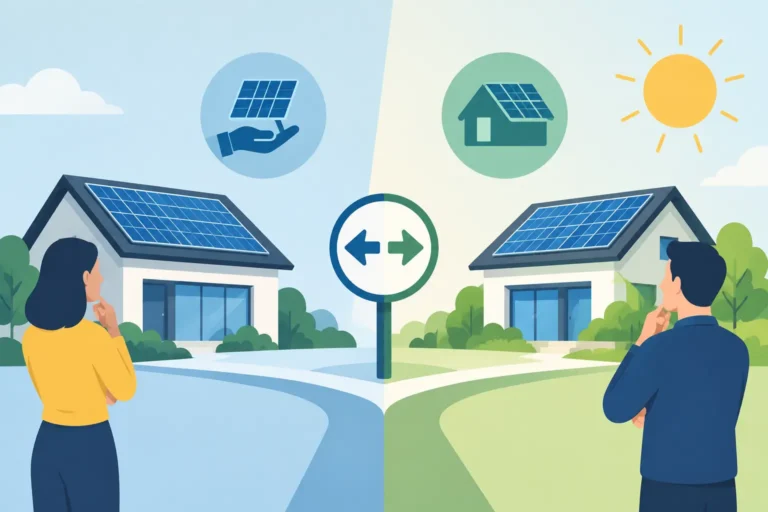
A solar quote can look very different depending on how you pay for the system. In the solar lease vs purchase decision, the panels may be similar, but who owns them, who receives the financial benefits and what happens when you sell the property can be completely different.
For most Australian homeowners and many businesses, buying a solar system delivers the strongest long-term value. A lease can still suit particular circumstances, especially where preserving cash flow matters more than ownership. The right choice comes down to your budget, energy use, plans for the property and appetite for long-term commitments.
Solar lease vs purchase: the key difference
When you purchase solar, you own the panels, inverter and any battery included in the system once it is paid for. You can pay upfront or use a solar loan. Either way, the system is an asset on your property, and the electricity it produces helps reduce your bills from day one.
With a solar lease, a provider owns the system and installs it on your roof. You make regular lease payments for an agreed term, often over many years. Depending on the arrangement, you may pay a fixed monthly amount or pay for the solar energy generated through a power purchase agreement.
That ownership difference affects nearly every part of the decision: upfront cost, access to incentives, maintenance responsibilities, property sale arrangements and the savings you keep over the life of the system.
Why buying solar is usually the stronger long-term option
Buying requires more money at the start, but it gives you control and lets you retain the full benefit of the energy your system produces. Once the system has paid for itself through lower electricity bills, the remaining solar generation is working for you without an ongoing lease payment.
An owned system may also allow you to access available Small-scale Technology Certificates, commonly reflected as an upfront discount on eligible residential and small-business solar systems. Eligibility and certificate values can change, so this should always be confirmed as part of a current quote. With a lease, the provider may receive the benefit of those certificates rather than you.
Ownership also gives you more freedom to make decisions later. You can add a battery when your household’s energy habits change, replace an inverter at the appropriate time, or expand the system if your electricity demand grows. This matters for families adding an electric vehicle, installing reverse-cycle heating and cooling, or moving more appliances from gas to electricity.
For a business, owning solar can reduce operating costs and provide a long-term energy asset. The tax treatment of a purchased system, loan interest or depreciation can vary by business structure, so it is worth getting advice from your accountant before making a decision.
The trade-off: upfront cost and responsibility
The obvious drawback of purchasing is the initial investment. Even after applicable incentives, a quality system is a significant purchase. Finance can spread the cost, although interest and fees need to be included when comparing the total cost of ownership.
As the owner, you are also responsible for maintaining the system after the relevant workmanship and product warranties end. High-quality equipment, correct installation and a system designed for the local conditions reduce that risk considerably. Solar panels have no moving parts, but inverters, batteries and monitoring equipment all deserve consideration when planning for the decades ahead.
A tailored design matters here. A system that is too small may limit your savings, while one that is oversized for your daytime use may export more energy at a lower feed-in tariff. Good solar planning considers your interval data or bills, roof orientation, shading, future electricity needs and whether battery storage makes practical financial sense.
When a solar lease may make sense
A lease can be appealing if you want solar with little or no upfront payment. Instead of committing capital to equipment, you make predictable regular payments while benefiting from lower grid electricity use. For a business managing competing cash-flow priorities, that can be an understandable attraction.
Some lease structures also include monitoring, maintenance or performance commitments. This can make solar feel simpler for an owner who does not want to manage equipment directly. However, the inclusions need to be clearly set out in the contract. Do not assume every repair, replacement or call-out will be covered for the whole term.
A lease is most worth considering when cash preservation is genuinely more valuable to you than keeping the full financial return from the system. It may also suit organisations that have strict capital expenditure limits but want to act on energy costs and sustainability goals now.
The important point is that low upfront cost does not automatically mean low total cost. Add every scheduled payment across the full contract term, any annual price increases, end-of-term fees and a possible buyout amount. Then compare that figure with a purchased system of equivalent quality and output.
Questions to ask before signing a lease
Lease contracts vary widely, so the details matter more than the label. Before proceeding, ask for clear written answers about the following:
- Who owns the panels, inverter and battery throughout the agreement, and who owns them at the end?
- Is the payment fixed, or can it rise each year through indexation?
- What maintenance, monitoring, insurance and replacement costs are included?
- What happens if the system underperforms, requires major repairs or is damaged?
- Can the agreement be transferred if you sell the property, and what fees apply?
- Is there a buyout option, and how is the buyout price calculated?
Property sales deserve particular attention. A buyer may be comfortable taking over a solar lease, but they may also prefer a home with fully owned solar. If the agreement cannot be transferred easily, you could need to pay out the lease before settlement. This is not necessarily a deal-breaker, but it should never be an afterthought.
Compare the numbers on the same basis
The fairest comparison is not a monthly lease payment against the cash price of a system. Compare the total cost and likely savings over a realistic period, such as 10, 15 or 20 years.
Start with the system’s expected annual generation and how much of that power you are likely to use during the day. Solar electricity used in your home or business generally offsets electricity you would otherwise buy from the grid, which is usually more valuable than exporting it. Electricity prices, feed-in tariffs and household behaviour all affect the result.
Then factor in the purchase price after applicable incentives, finance costs if relevant, expected maintenance and product warranties. For a lease, include every payment, escalation clause, establishment fee, service fee and end-of-term condition. A lease that looks affordable month to month can cost substantially more than ownership over its full life.
Battery storage should be assessed separately as well. A battery can increase your use of solar power after sunset and may provide backup capability when designed with that feature, but not every battery system automatically keeps the lights on during an outage. Whether it improves the overall return depends on your load profile, tariff and energy resilience priorities.
Choosing the right path for your property
If you plan to stay in your home or operate from the same premises for years, can manage the upfront cost or suitable finance, and want the greatest long-term savings, purchasing is generally the better fit. You retain the asset, the incentives available to you and the flexibility to adapt the system over time.
If your priority is avoiding upfront expenditure and you understand the total contractual commitment, a lease may be a workable alternative. It should be treated as a long-term finance arrangement, not simply a cheaper solar option.
For Canberra and NSW properties, the best answer is rarely found in a generic package. Roof design, shade, weather conditions, electricity tariffs, operating hours and future plans all shape the right system size and payment approach. A trusted installer should explain those trade-offs plainly, not push you towards a one-size-fits-all answer.
IMS Energy can help property owners compare a tailored system design and projected savings against their energy goals, so the decision is based on real usage rather than a headline price. The most valuable solar investment is the one you understand, own or finance confidently, and can rely on for years to come.