When the power goes out, the question is not how much energy your solar system produced last summer. It is whether the fridge stays cold, the lights work, the internet remains on and essential equipment keeps running. The best solar batteries for blackout protection are the ones designed around those real priorities, not simply the largest battery advertised.
For Australian homes and businesses, a battery can provide meaningful peace of mind during grid outages. However, a battery does not automatically create backup power. The system needs the right inverter, switching equipment, electrical design and battery capacity to safely power selected circuits when the grid is unavailable.
What makes a solar battery blackout-ready?
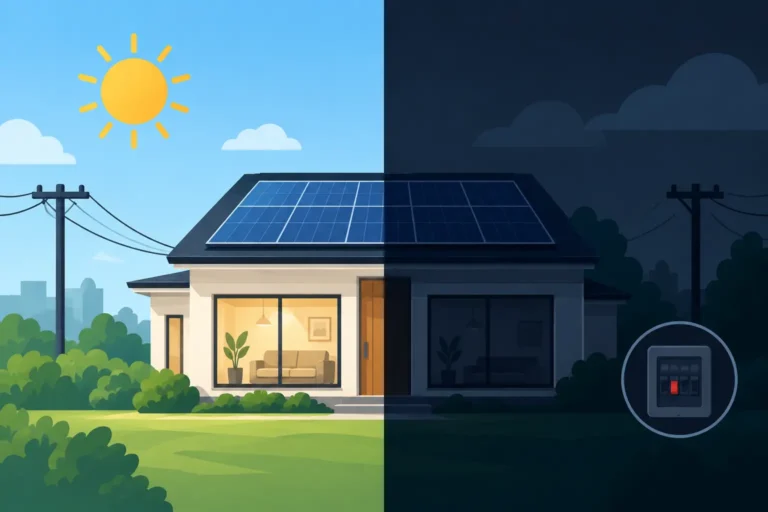
A standard solar and battery system may reduce power bills by storing daytime solar energy for use after sunset. During a blackout, many systems shut down unless they have dedicated backup functionality. This safety measure prevents solar energy from feeding into the grid while line workers are carrying out repairs.
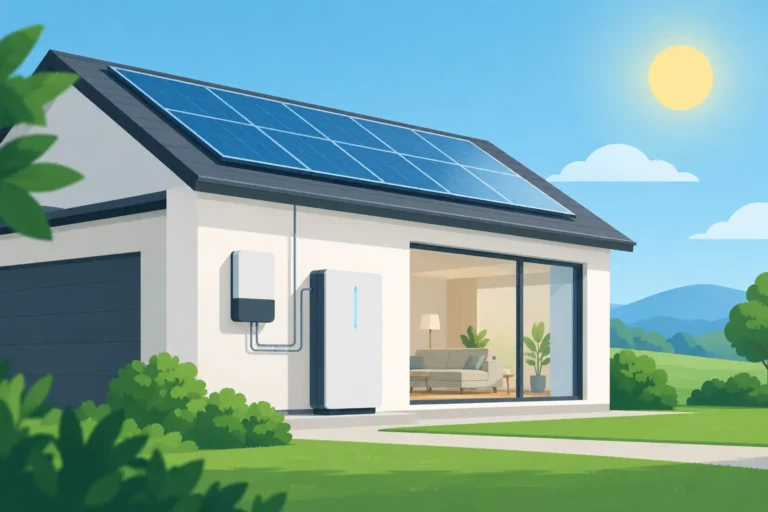
A blackout-ready system uses an inverter and changeover arrangement that can safely separate your property from the grid. Once isolated, the battery and solar panels can supply power to nominated circuits, or in some designs, much of the property. The solar panels are particularly valuable during a daytime outage because they can recharge the battery while covering live household demand.
The distinction matters. A battery with a large storage figure may look impressive, but backup performance depends on three connected factors: usable battery capacity, the inverter’s output power, and the circuits included in the backup plan. A well-designed 10 kWh system supporting essential loads can be more useful in an outage than a larger system trying to run every appliance without a clear load strategy.
Essential backup versus whole-home backup
Essential-load backup is often the practical choice for suburban homes. It usually covers items such as refrigeration, lighting, selected power points, internet equipment, security systems and a garage door. It keeps daily life manageable while controlling battery use.
Whole-home backup is designed to supply far more of the switchboard. It can be an excellent option for larger households, home offices, properties with medical equipment or businesses where interruption is costly. It also requires more careful planning. High-draw appliances such as ducted air conditioning, ovens, induction cooktops, pool pumps and electric hot water can drain stored energy quickly or exceed the inverter’s output limit.
Neither approach is automatically better. The right choice depends on what you genuinely need to keep operating, how long outages usually last in your area and how much solar generation is available to recharge the system.
Best solar batteries for blackout protection: what to compare
There is no single best battery for every Australian property. The strongest option is one that matches your electricity use, roof space, budget and required level of backup. Premium battery systems from established manufacturers are worth considering because blackout protection is a long-term investment in reliability, not just a feature on a quote.
Tesla Powerwall for high-demand homes
Tesla Powerwall is a familiar choice for households seeking a premium integrated battery solution. It suits customers who want substantial storage, strong backup capability and a system designed to manage home energy use intelligently. Depending on the final configuration, it can support essential circuits or broader home backup.
For a busy family home, a Powerwall-style solution can make sense where evening usage is high and blackout resilience matters alongside bill savings. The trade-off is that installation requirements, inverter compatibility and the loads you expect to run must be assessed carefully. A battery cannot make an electric home operate without limits during an extended outage.
Hinen battery systems for tailored capacity
Hinen battery solutions can be a strong fit where modularity and tailored storage are priorities. A modular approach can allow capacity to be planned around current consumption, with room to consider future needs such as an electric vehicle, additional household members or a growing business load.
This is especially useful when the aim is to protect essentials today without overinvesting in capacity that will sit unused. The right configuration still comes back to usable energy, backup output and how the system will be wired. Adding battery capacity increases runtime, but it does not necessarily increase the amount of power available at any one moment.
Hybrid and off-grid battery systems for regional properties
For regional homes, farms and remote sites, outage protection can be more than a convenience. Hybrid and off-grid systems can be designed around longer outage periods, generator integration, larger solar arrays and critical operational loads such as pumps, communications or refrigeration.
These systems need detailed site-specific design. Winter solar production, shading, seasonal demand and the consequences of several overcast days all affect the battery size required. In these situations, an honest load assessment is more valuable than choosing a battery based on a headline capacity alone.
How much battery storage do you need?
Start by identifying the appliances that matter during an outage and estimating their daily energy use. A fridge may use a modest amount of energy over 24 hours, while an air conditioner or electric hot water system can consume a significant share of the battery in only a few hours.
A household looking to run basic essentials overnight may be well served by a modest battery, particularly if solar generation can recharge it the next day. A household wanting to run multiple split-system air conditioners, a pool pump, cooking appliances and general power through a long outage will need considerably more capacity and inverter output.
Runtime is never fixed. It changes with weather, battery state of charge, appliance use and whether solar is producing. As a simple example, a 13 kWh battery does not provide 13 hours of backup to every home. If your backup loads average 1 kW, it may last around 13 hours before allowing for system limits and energy losses. If demand rises to 3 kW, the available time drops sharply.
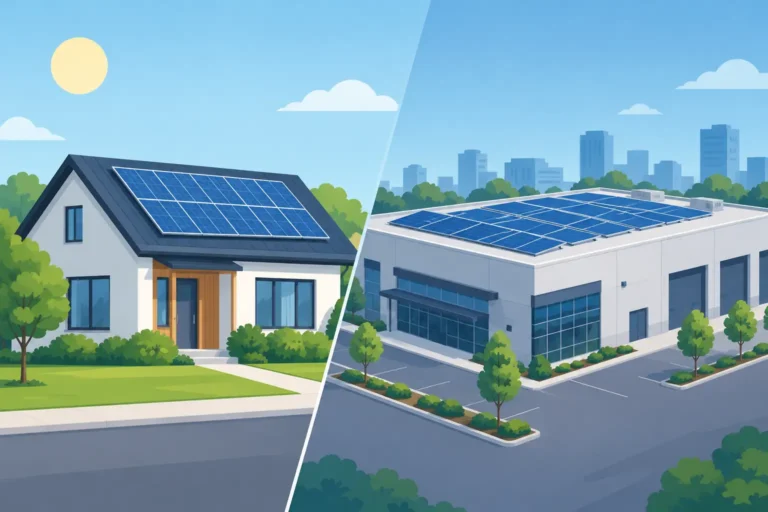
For businesses, the same principle applies. A battery may be sized to keep point-of-sale systems, refrigeration, lighting, communications and security running, rather than attempting to operate every load. That targeted approach can protect revenue and customer service without making the system unnecessarily expensive.
Questions to ask before choosing a battery
A quality installer should ask what you want to keep running, not just how many kilowatt-hours you would like to buy. They should also review your interval data or electricity bills, roof layout, existing solar system, switchboard condition and future plans.
Ask whether the proposed system provides backup during a grid outage, which circuits are included, how much power it can deliver at once and whether solar can continue charging the battery while the grid is down. It is also sensible to ask how the system manages high-starting loads, what monitoring is included and what support is available after installation.
For homes with three-phase power, specialised equipment may be needed to deliver the desired backup outcome. Likewise, an existing solar system may be suitable for battery integration, but compatibility should be confirmed rather than assumed.
Avoid the most common backup battery mistakes
The first mistake is assuming all batteries provide blackout power. They do not. Backup must be specified in the system design.
The second is focusing only on storage capacity. A battery may store plenty of energy but still be unable to start or sustain several large appliances at once. Output power matters just as much as kilowatt-hours.
The third is trying to back up every load without considering behaviour during an outage. A clear plan for heating, cooling, cooking and hot water can extend battery runtime significantly. Finally, do not overlook installation quality. Correct electrical design, compliant equipment and thoughtful commissioning are central to safe, dependable backup power.
A tailored battery system gives you more than stored solar energy. It gives your household or business a practical plan for the moments when the grid cannot be relied upon. Before selecting a model, map out the loads that matter most and have an experienced solar team design the backup around the way you actually live and work.