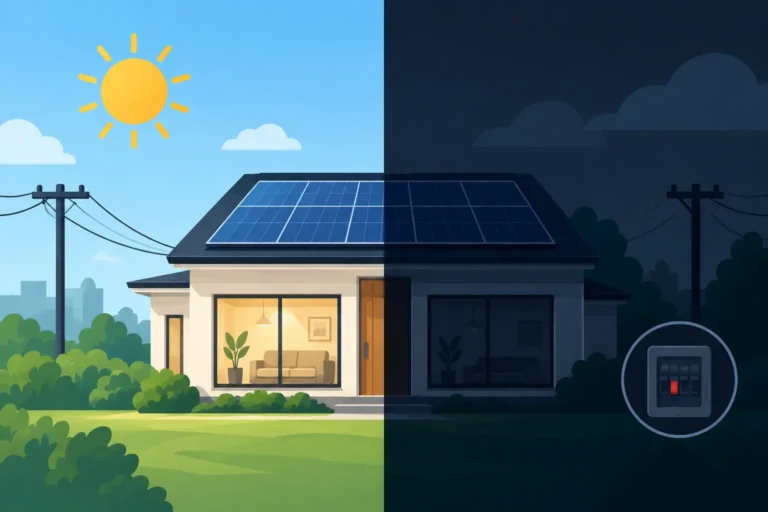
A blackout can feel confusing when there are solar panels on the roof and bright sunshine outside. So, what happens during solar blackout? For most standard grid-connected homes, the solar system shuts down with the grid. The panels are still producing potential energy, but the inverter stops supplying power to the home until the network is restored.
That outcome surprises plenty of solar owners, particularly when the power is out on a clear Canberra or NSW afternoon. It is not a fault with the panels. It is a critical safety feature built into compliant solar systems. The good news is that a correctly designed battery and backup system can change what is possible during an outage.
Why solar panels switch off in a blackout
A typical rooftop solar system has panels, an inverter and a connection to the electricity grid. During normal operation, the inverter converts solar energy into usable AC electricity for your appliances. Any extra generation can be exported to the grid, while electricity is imported when the home needs more than the panels are producing.
When the grid fails, a standard inverter is required to disconnect. This is known as anti-islanding protection. It prevents your solar system from sending electricity into local powerlines while network crews may be working to find and repair the fault.
Without this protection, a home solar system could create a serious hazard for electricians and emergency workers. It could also damage equipment when grid power returns. The automatic shutdown is therefore a sign that the system is operating as intended.
A solar blackout does not mean the panels have stopped working or been damaged. It means the inverter has no stable grid reference to work with, so it cannot safely power the property. Once the grid returns and the inverter completes its safety checks, solar production usually resumes automatically.
What happens during solar blackout with a battery?
A battery can keep selected parts of your property running, but only if the system has been designed for backup operation. Installing a battery alone does not guarantee that every power point and appliance will work during a blackout.
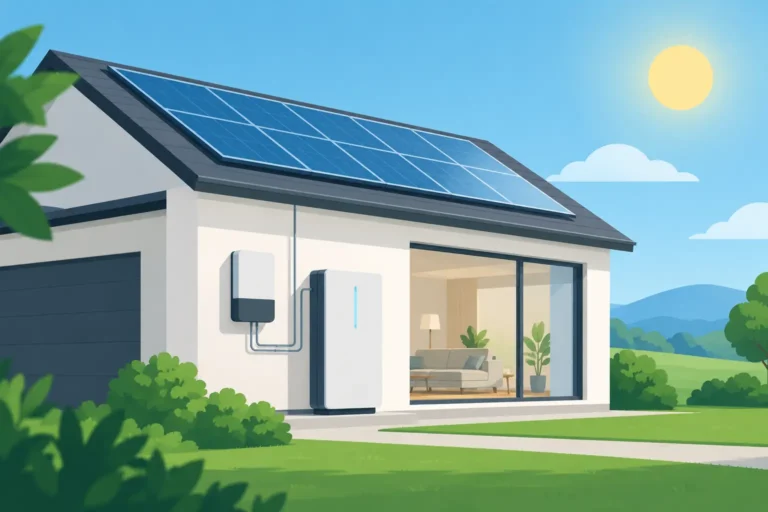
A backup-ready system uses suitable battery equipment, a compatible inverter and an isolation or changeover arrangement at the switchboard. When grid supply drops out, the system separates the property from the network and creates its own stable power supply. Your solar panels can then help power the home and recharge the battery during daylight hours.
The experience depends on the type of backup selected. Some systems support an essential-loads backup circuit. This commonly covers practical items such as lights, the fridge, internet equipment, selected power points and perhaps a garage door. It gives a household the basics without draining battery capacity unnecessarily.
Whole-home backup is a more comprehensive option, but it needs careful planning. High-demand appliances such as ducted air conditioning, electric ovens, pool pumps, hot water systems and EV chargers can place a large load on the battery and inverter. A system may technically supply the whole home, yet still require sensible energy use during an extended outage.
For businesses, the priority may be different. Backup power may be designed to protect refrigeration, point-of-sale equipment, communications, security systems, servers or critical machinery. The right approach starts with identifying which loads genuinely need to stay on, how long they need to run and what happens if they lose power.
Daylight helps, but it is not unlimited power
With battery backup, a sunny day can significantly extend your resilience. Solar generation can meet current household demand while topping up the battery for the evening. However, output changes with cloud cover, season, panel orientation and shading. Solar production also falls to zero after sunset.
Battery capacity matters, but so does inverter output. A large battery may store plenty of energy, while an undersized inverter may not be able to start or run several heavy appliances at the same time. This is why a tailored design is more valuable than choosing equipment on capacity alone.
Not all solar systems offer blackout protection
There are several setups that are often mistaken for backup systems. A conventional grid-connected solar system generally turns off during an outage. A solar system with a battery may still turn off if the battery and inverter are not configured for backup. A backup-ready system can keep nominated circuits running. An off-grid system is designed to operate independently, with solar, batteries and usually another generation source planned around the site’s needs.
Some hybrid systems also provide a limited daytime backup socket. This can be useful for charging mobiles or running a small appliance in good sun, but it is not the same as powering your household circuits. It is worth checking exactly what your existing system can do rather than assuming that solar panels equal blackout power.
For regional properties, farms and remote sites, the decision can be even more significant. Grid outages may last longer, mobile coverage can be limited and access to fuel or services may not be immediate. A properly sized off-grid or backup system offers independence, but it must allow for winter generation, periods of poor weather, battery reserve and the real electrical demands of the property.
How long can solar battery backup last?
There is no single answer because usage drives the result. A battery that can support lights, a fridge, internet and a few small appliances for many hours may be depleted quickly if the household continues using electric heating, cooking or air conditioning as normal.
As a simple example, essential loads averaging 1 kW use around 10 kWh over 10 hours. Add a 3 kW air conditioner, and the same amount of stored energy could be used in a little over three hours. Solar generation the next day can replenish some or all of that energy, depending on weather and daytime consumption.
This is why backup planning should begin with behaviour as well as hardware. During an outage, avoid unnecessary high-load appliances, charge essential devices while the sun is up and keep the fridge and freezer closed where possible. Small choices can make a meaningful difference to how long stored power lasts.
Preparing your property for a blackout
The best time to plan for an outage is before one happens. Start by reviewing your current system documents or asking your installer whether your inverter supports backup operation. If you already have a battery, confirm which circuits are connected to backup and whether there are any limits on the appliances you can run.
For a new installation or upgrade, a clear discussion with your solar provider should cover four practical points:
- the appliances and circuits that matter most during an outage
- how many hours or days of autonomy you are aiming for
- whether you need essential-loads or whole-home backup
- how future needs, such as an EV or electric heating, may affect the design
It is also sensible to keep torches, charged power banks and an emergency plan on hand. Battery backup improves comfort and resilience, but it should sit alongside normal blackout preparation, particularly in areas prone to storms or bushfire-related disruptions.
Choosing a system that suits your real energy needs
Solar backup is not a one-size-fits-all purchase. A family working from home may value internet, refrigeration and lighting above all else. Another household may need to keep medical equipment operating. A business may prioritise avoiding spoiled stock or maintaining security after hours. Each situation calls for a different mix of solar capacity, battery storage, inverter capability and backed-up circuits.
There are trade-offs. More battery capacity and broader backup coverage can provide greater independence, but add to the upfront investment. A smaller essential-loads setup can be a cost-effective way to protect the functions that matter most. Honest system planning weighs likely outage risks, electricity use, budget and long-term goals rather than promising unlimited power from a limited battery.
For homeowners and businesses across Canberra and NSW, a tailored solar and battery design can turn a blackout from a major disruption into a manageable inconvenience. The most useful next step is to understand what your current system does, then plan backup around the power you genuinely cannot afford to lose.