A home battery can keep the lights on when the grid goes down, but whether it can run everything in your home is a more practical question than a simple yes or no. If you are asking, “can battery storage power whole house needs?”, the answer depends on how much electricity your household uses, which appliances you want to run, and how long you need the battery to last.
For many Australian households, a well-designed solar and battery system can cover normal evening use and provide meaningful backup power. Running every appliance at once, including large air conditioners, electric hot water, ovens and pool equipment, requires far more battery capacity and output than most standard home battery systems provide. The right outcome comes from designing around your priorities, not simply choosing the biggest battery on the market.
Can battery storage power a whole house during a blackout?
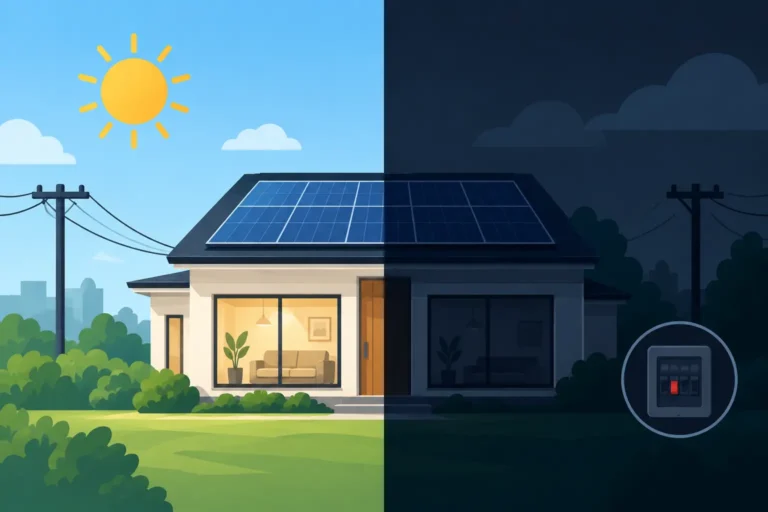
Yes, some battery systems can be configured to supply power to an entire house during an outage. This is often called whole-home backup. However, supplying the whole switchboard does not mean the battery will comfortably run every load for an extended period.
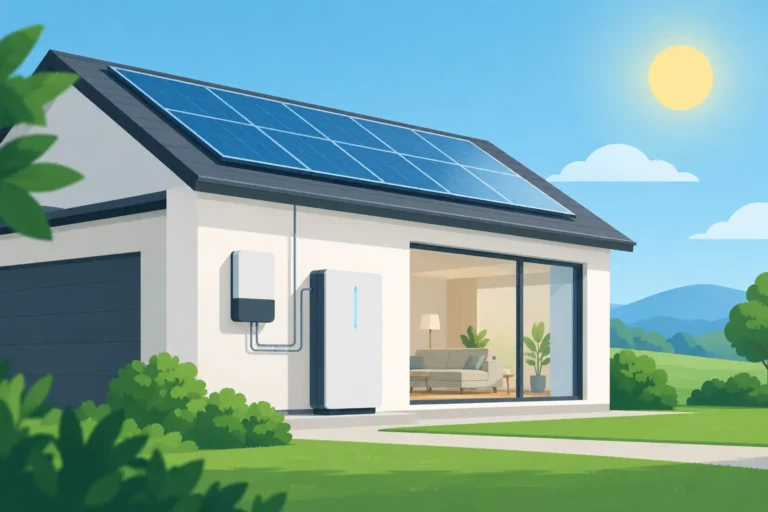
A battery has two key limits: its usable energy capacity, measured in kilowatt-hours (kWh), and its power output, measured in kilowatts (kW). Capacity tells you how much stored energy is available. Output tells you how much the battery can deliver at one time.
For example, a 13.5 kWh battery may have enough stored energy to support lighting, refrigeration, internet, televisions and a few power points through the evening. But if several high-demand appliances start together, such as ducted air conditioning, an electric oven and a kettle, the required power may exceed the battery’s output limit. The system may then reduce supply or switch off to protect itself.
That is why whole-home backup needs thoughtful load management. It is a different proposition from backing up selected essential circuits.
Essential backup versus whole-home backup
For many homes, essential-load backup provides the best balance of resilience and cost. During a blackout, the battery is set up to power the circuits that matter most: the fridge, lights, internet, selected power points, security systems and perhaps a garage door or small air conditioner.
Whole-home backup keeps all circuits available, giving the household greater flexibility. It can be a good fit for properties with medical equipment, home offices, rural power reliability concerns, or families who want minimal disruption during outages. Yet it needs more planning, because the household must still manage heavy loads carefully when operating from battery power.
The most suitable approach depends on your expectations. If your goal is to keep food cold, devices charged and the home functional through a short outage, essential backup may be more than enough. If you want the house to operate much as it normally does, a larger battery bank, compatible inverter and backup gateway may be required.
What determines how long a home battery will last?
There is no single answer because every home uses energy differently. A battery’s run time is shaped by four practical factors: battery size, household demand, the appliances running, and whether your solar panels are generating power.
A home using 1 kW continuously will draw around 10 kWh over 10 hours. In reality, household use moves up and down throughout the day. A refrigerator cycles on and off, lighting uses relatively little power, while cooking appliances and heating can create sharp spikes in demand.
As a broad guide, a battery in the 10 to 15 kWh range can often support essential loads overnight or through a shorter blackout, provided high-energy appliances are limited. A larger battery system, or multiple batteries, can extend that coverage considerably. It is still sensible to check the system’s usable capacity rather than its headline capacity, as batteries retain a small reserve to help protect their lifespan.
Solar generation can make a significant difference during a daytime outage. If the system is designed for backup operation, rooftop solar may recharge the battery while also running household loads. A sunny day can therefore extend your independence well beyond the battery’s stored energy alone. Overnight, however, the battery must carry the load until solar production resumes.
The appliances that change the calculation
Not all appliances place the same demand on a battery. Lighting, phone charging, internet equipment and efficient refrigerators are generally manageable. Electric resistance heating is another story.
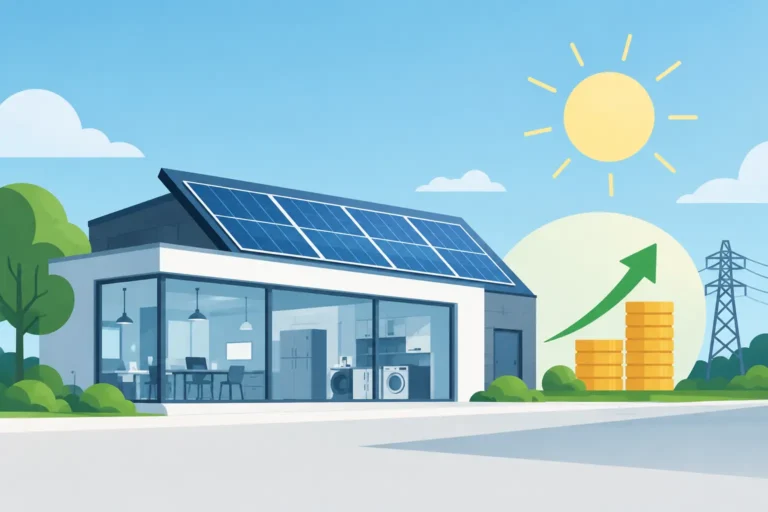
The appliances most likely to drain a battery quickly include electric ovens and cooktops, large air conditioners, electric hot water systems, pool pumps, clothes dryers, spa heaters and electric vehicle chargers. These appliances are not necessarily incompatible with battery power, but they need to be accounted for in the system design.
A household with gas cooking, solar hot water or efficient reverse-cycle air conditioning may find whole-home battery backup easier to achieve than a fully electric home with several large loads. For this reason, an honest assessment of how your home operates is more useful than comparing battery capacity figures alone.
Solar batteries are not all designed for blackout backup
A common misunderstanding is that every solar battery will keep working when the grid fails. That is not always the case. Some battery systems are installed primarily to store solar energy and reduce grid purchases, but do not include backup capability unless the appropriate inverter, gateway or switchgear is included.
For safe operation, a backup system must isolate the home from the electricity network during an outage. This prevents power from being sent back into grid lines while crews may be working on them. Once the outage ends, the system reconnects in a controlled way.
When considering a battery, ask specifically whether it includes backup power, which circuits are covered, how quickly it switches over, and whether solar can continue operating during a blackout. These details matter just as much as the battery’s kWh rating.
How much battery capacity does your home need?
The best starting point is your actual electricity use. Review your power bills, smart meter data if available, and the times when your home uses the most energy. Then decide what you want the battery to achieve.
If the priority is lowering evening electricity bills, a battery can be sized around the solar surplus available during the day and your typical after-sunset consumption. If backup is the priority, the design should begin with the loads you want to maintain and the length of outage you want to prepare for.
For example, a family may want to cover refrigeration, lights, communications, work-from-home equipment and a few selected appliances for one night. Another household in regional NSW may want enough stored power for a full day or longer because outages can take more time to resolve. Those are different requirements, even if both homes have similar solar panel systems.
A tailored assessment should also consider roof size, solar generation across seasons, shading, tariff structure, future electric vehicle charging and any plans to replace gas appliances. Battery systems can often be expanded, but planning ahead may avoid an undersized system or unnecessary changes later.
Is a larger battery always better?
Not necessarily. More capacity can provide longer backup and greater ability to use your own solar energy, but it also increases the upfront investment. If your solar system does not regularly produce enough surplus electricity to charge a very large battery, part of that capacity may sit underused for much of the year.
There is also a difference between buying a battery for bill savings and buying one for resilience. The financial return on a very large backup system may not be the only consideration if avoiding disruption is valuable to your household or business. For some customers, peace of mind during outages is a worthwhile outcome in its own right.
The sensible choice is a system that matches your current use while allowing for realistic future needs. Quality equipment, correct installation and clear advice on how to use the system during an outage are every bit as important as battery size.
Plan for the way your household really lives
A battery can power a whole house, but the strongest results come from being clear about what “whole house” means for your family. It may mean every circuit is available, with sensible limits on heavy appliances. Or it may mean the essentials are protected so daily life can continue when the grid is unavailable.
At IMS Energy, battery recommendations are based on your property, energy habits, solar production and backup expectations, rather than a one-size-fits-all package. A properly planned system gives you practical savings in normal conditions and dependable support when you need it most. Start with the loads that matter to you, and you will be in a far better position to choose a battery solution with confidence.