A battery ready solar system can be a sensible middle ground for households and businesses that want to start reducing grid electricity now, while keeping the door open for battery storage later. The key is making sure “battery ready” means more than a sales phrase. The system needs to be designed with your future battery plans, switchboard, energy use and local network requirements in mind from day one.
For many Australian properties, solar panels are the first step because they immediately reduce daytime electricity purchases. A battery can follow when the budget, available products or household energy habits make the investment stack up. Done properly, this staged approach gives you flexibility without forcing you to pay twice for equipment or electrical work.
What does battery ready actually mean?
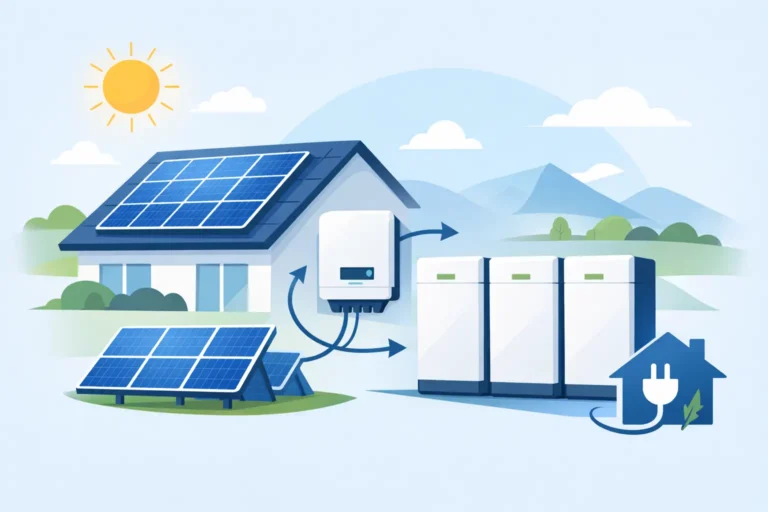
There is no single definition of battery ready. In its most useful form, it means your solar installation has been planned so a compatible battery can be added with minimal changes later. That may involve selecting a hybrid inverter that can manage solar and a battery, allowing suitable space near the switchboard, and accounting for battery cabling and protection equipment during the original design.
However, a solar system can also be described as battery ready simply because a battery could be connected in the future after additional work. That is technically possible for many systems, but it may require a separate battery inverter, switchboard upgrades, extra labour or replacement of the original solar inverter.
The difference matters. A lower upfront price can look attractive, yet it may not be the best value if adding storage later means removing equipment that is still relatively new. Before committing, ask for a clear written explanation of what will be required to install a battery in future and what equipment is intended to remain in place.
Why homeowners choose a battery-ready solar system
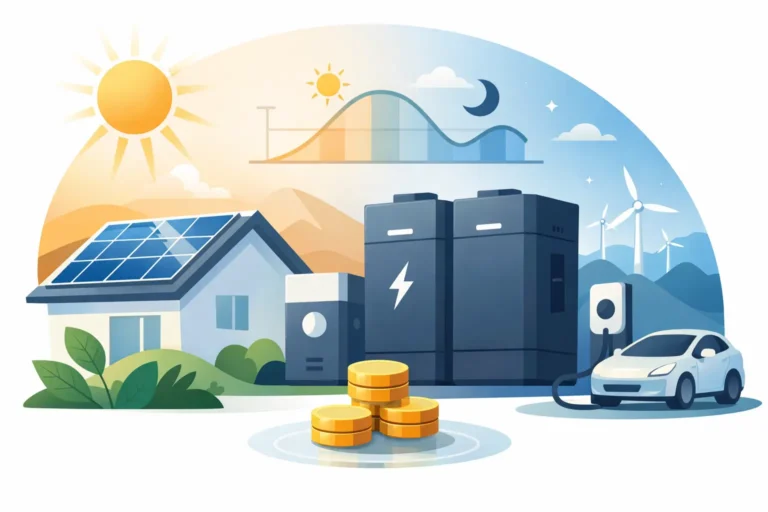
Solar production and household demand do not always line up. Panels typically generate most power through the middle of the day, while many families use more electricity in the morning and evening. Without a battery, excess solar can be exported to the grid for a feed-in tariff, then electricity is purchased later when the home needs it.
A battery stores some of that surplus generation for use after sunset. It can help reduce grid imports, particularly for homes with high evening consumption from cooking, air conditioning, heating, pool pumps, EV charging or a busy family routine. For a business operating largely during daylight hours, solar on its own may already provide strong value. Storage can still be worthwhile, but the case depends more heavily on operating hours, demand patterns and tariff structure.
Choosing battery ready gives you time to see how your solar system performs in real conditions. After several months, you can review consumption data rather than guessing. You may find that changing appliance schedules, setting a pool pump to run in daylight, or charging an electric vehicle from solar delivers much of the benefit you were looking for. Or the data may show that a battery would reduce substantial evening grid use.
The design choices that protect your future options
A well-planned system starts with your current bills but should not stop there. A good solar design considers likely changes over the next five to 10 years, including an electric vehicle, a growing family, home office use, electrified heating and cooling, or a move away from gas appliances.
Inverter selection and compatibility
The inverter is central to any future battery plan. A hybrid inverter is designed to work with solar panels and compatible batteries. It can be a practical option for customers who expect to add storage in the near future, although compatibility should always be confirmed rather than assumed. Not every battery works with every hybrid inverter, and manufacturers may have specific approved combinations.
A standard string inverter can also be paired with an AC-coupled battery later. This can offer flexibility, especially when keeping an existing solar system, but it adds another piece of equipment and may involve more installation work. Neither path is automatically better. The right choice depends on your budget, preferred battery brand, roof size, expected storage timeframe and backup requirements.
Switchboard capacity and installation space
Battery systems need suitable electrical protection, isolation and physical space. Older switchboards may need upgrades before a battery can be safely installed, while newer homes may still require additional components or a dedicated essential-loads board for backup operation.
It is also worth considering where a future battery would sit. The location needs to meet manufacturer clearances and applicable standards, while remaining practical for access, ventilation and protection from the elements. Planning this before solar installation avoids awkward compromises later, particularly on compact blocks or commercial sites with limited service areas.
Solar array size and export limits
More panels do not always mean more usable battery charging. Your roof orientation, shading, annual consumption and local export limits all influence system design. In parts of Canberra and NSW, distribution network rules can affect the amount of solar power a property is allowed to export, and these requirements can vary by area.
A battery may help absorb excess daytime generation instead of exporting it, but it is not a substitute for careful system sizing. An oversized array paired with a small battery can still export heavily once the battery is full. Conversely, a large battery may spend too much time undercharged if the solar array is too small or the site has significant shade.
Monitoring from the start
Good monitoring turns a solar system into a source of useful information. It shows how much solar your property produces, when you consume electricity and how much energy is exported or imported. If a battery is added later, the same data helps determine a realistic storage size and provides a benchmark for measuring the outcome.
Look for monitoring that is easy to understand, not just a screen full of technical figures. The best system is one you will actually check when deciding whether to shift loads into daylight or invest in storage.
Battery ready is not the same as blackout backup
This is one of the most common misunderstandings. Solar panels alone generally switch off during a grid outage for safety reasons, even if the sun is shining. A battery does not automatically provide backup power either.
To keep selected circuits running during a blackout, the battery system needs dedicated backup capability and additional electrical design. Depending on the equipment and site, this may include a backup gateway or changeover equipment, an essential-loads board and clear decisions about which circuits will be supported.
Most households do not need to back up every appliance. Prioritising lights, refrigeration, internet, selected power points and perhaps a garage door can make more practical use of available battery capacity. High-load equipment such as ducted air conditioning, electric hot water, ovens and large pumps may require a larger, more expensive system if backup is expected.
If resilience is a priority, raise it at the first design discussion. Retrofitting backup later can be possible, but it is more straightforward when the switchboard and circuit layout have been planned for it.
When waiting on a battery makes financial sense
A battery is a long-term energy asset, not a universal quick win. The financial case depends on electricity rates, feed-in tariffs, solar generation, household timing, battery capacity, warranty conditions and how much stored energy you will genuinely use. It also depends on whether you value backup power and greater energy independence beyond a simple payback calculation.
Waiting can make sense when your current budget is focused on installing enough quality solar capacity, your daytime energy use is already high, or you are unsure how your electricity habits will change. It can also be sensible if you plan significant home improvements, an EV purchase or new electric appliances that will alter your consumption profile.
Installing a battery sooner may be the better choice where evening power use is consistently high, tariffs strongly reward reducing peak imports, or backup power has real value for your household or operations. Regional properties, home-based businesses and sites with sensitive equipment may place a higher value on resilience than a spreadsheet alone can show.
Questions to ask before you sign
Ask whether the proposed inverter is hybrid or whether a future battery would be AC-coupled. Confirm the compatible battery options, whether switchboard work has been allowed for, and whether there is room for a battery at the proposed location. It is also wise to ask what additional costs may apply if storage is installed in two or three years rather than at the same time as solar.
If you want blackout protection, ask exactly what will operate during an outage. Do not settle for vague wording such as “backup capable”. Request clarity on the supported circuits, expected power output and the equipment required to make backup work.
A trusted installer should also discuss warranties, product support and the practical limits of the design. At IMS Energy, that conversation is based on the property, your energy goals and the way you intend to use power, rather than a one-size-fits-all package.
A battery-ready design is ultimately about preserving choice. Start with a solar system that suits the way you use electricity now, leave a clear and cost-conscious path to storage, and make each next step when the numbers and your needs align.