A lot of solar decisions look simple until you start costing them properly. On grid vs off grid is one of the biggest examples. At first glance, it can seem like a choice between staying connected or cutting the cord. In reality, the right option depends on your property, your daily energy use, your budget, and how much independence you actually need.
For some homes and businesses, an on-grid solar system is the smartest financial move because it lowers power bills without the cost of full energy self-sufficiency. For others, especially in regional or remote parts of Australia, off-grid power is less about preference and more about practicality. If grid connection is unreliable, expensive or simply unavailable, off-grid can be the better long-term answer.
On grid vs off grid: the core difference
An on-grid system is connected to the electricity network. Your solar panels generate power during the day, your property uses that energy first, and any shortfall can be supplied by the grid. If your system produces excess energy, it can often be exported back to the network for a feed-in tariff, depending on your retailer and setup.
An off-grid system operates independently from the electricity network. It relies on solar panels, battery storage and usually a backup generator to keep the property powered day and night, through different weather conditions and across seasonal changes. There is no safety net from the grid, so the system needs to be carefully designed around your actual energy demand.
That difference sounds straightforward, but it changes everything – upfront cost, system design, maintenance, resilience and the way you use electricity day to day.
Why on-grid solar suits most properties
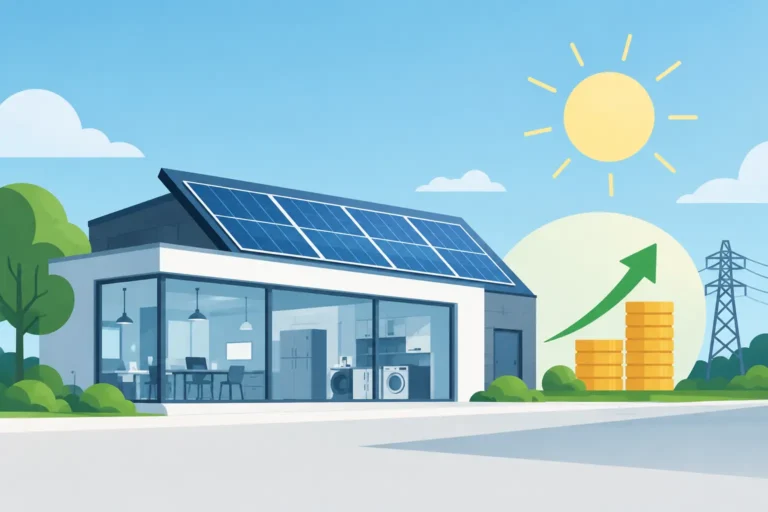
For the average suburban home or business, on-grid solar is often the most cost-effective option. You keep the reliability of grid connection while using solar to reduce your imported electricity. That means you can size the system around bill savings rather than trying to cover every possible peak in usage through batteries alone.
This usually makes on-grid systems more affordable to install than fully off-grid setups. You do not need the same level of battery capacity, and in some cases you may choose to install solar panels first and add battery storage later. That flexibility matters for households and businesses that want a staged approach rather than a large upfront spend.
There is also less lifestyle adjustment. If you run the air con hard during a run of cloudy days, or your business has an unexpectedly busy week, the grid helps carry the load. You are still exposed to electricity price rises, but your dependence on the retailer drops significantly when the solar system is properly designed.
For many customers, this is the sweet spot: lower bills, a cleaner power source, and the security of remaining connected.
The catch with on-grid systems
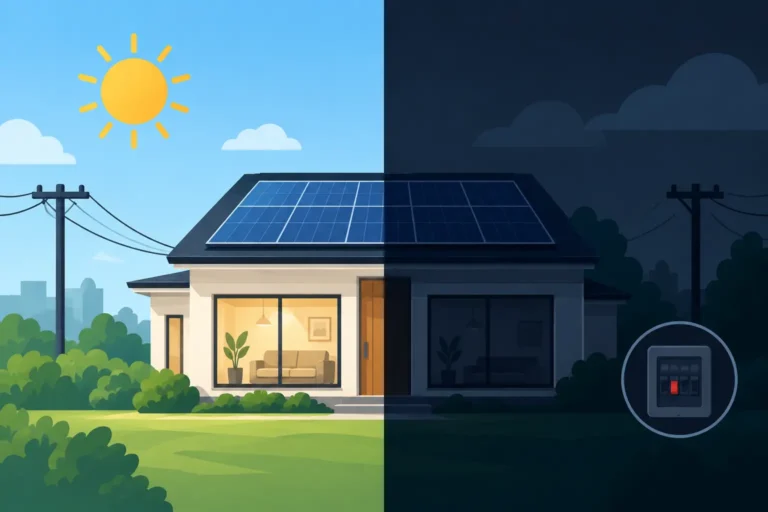
The main trade-off is that you are not fully energy independent. If the grid goes down, a standard on-grid solar system usually shuts down as well for safety reasons. That surprises a lot of people. They assume solar panels mean power during a blackout, but without the right battery and backup configuration, that is not how it works.
You are also still dealing with network charges, retailer pricing and changing feed-in tariffs. Solar helps, but it does not remove those variables completely.
When off-grid makes sense
Off-grid is best suited to properties where grid access is poor, prohibitively expensive, or not available at all. In some regional areas, the cost to bring power lines to a site can be so high that investing in a standalone system becomes the better financial decision.
It can also make sense for owners who place a high value on independence and resilience. If your property experiences regular outages, or you are building in a location where energy reliability matters more than anything else, off-grid can offer a level of control that the network cannot.
That said, off-grid is not just an on-grid system with more batteries. It needs detailed planning. Your energy use has to be understood across the whole year, not just on a typical day. Heating, cooling, pumps, refrigeration, workshop equipment and seasonal loads all need to be factored in. If the system is undersized, you feel it quickly.
A properly designed off-grid setup can perform exceptionally well, but it has to be tailored to the site, the load profile and the expectations of the people using it.
The reality of off-grid costs
The biggest barrier is usually upfront investment. Off-grid systems require more battery storage, more detailed engineering and often a backup generator as added protection. Because the system has to stand on its own, there is less room for guesswork.
That does not mean off-grid is poor value. In the right scenario, especially where grid connection costs are extreme, it can be the most sensible choice. But it is rarely the cheapest way to get into solar if the grid is already available and reliable.
There is also a behavioural side to it. Living or operating off-grid often means being more aware of when and how you use electricity. That does not have to be inconvenient, but it does require some discipline and realistic expectations.
On grid vs off grid for homes
For most Australian homes in established suburbs, on-grid solar with or without battery storage is the practical winner. It delivers savings, reduces dependence on the grid and keeps the household running normally. Families can still cook, cool the house and charge devices without having to manage every watt so closely.
Off-grid becomes more attractive for rural homes, new builds on remote land, farm properties and places where outages are frequent enough to cause real disruption. In those situations, the question is less about maximising feed-in tariffs and more about having dependable power year-round.
If you are deciding between the two, it helps to ask a simple question: are you trying to reduce bills, or are you trying to replace the grid entirely? Those are different goals, and they lead to very different system designs.
On grid vs off grid for businesses
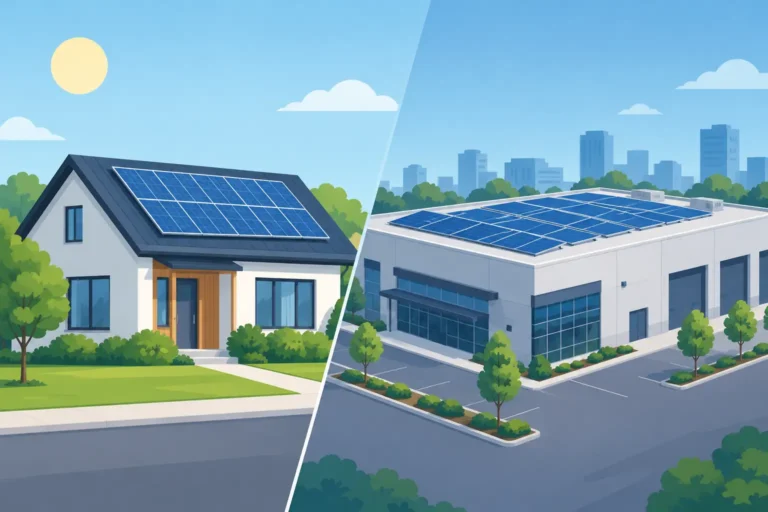
Businesses usually lean toward on-grid for one reason above all others: economics. Commercial sites can often make excellent use of daytime solar production, which aligns well with office, retail and operational hours. That can produce meaningful savings without the complexity of building a fully self-sufficient power system.
Battery storage can be added where backup capability or demand management is important, but most businesses still benefit from having the grid there as support. It allows operations to continue without the risk of battery depletion affecting productivity.
Off-grid for business is generally better suited to remote facilities, agricultural sites, telecommunications infrastructure, and locations where downtime or connection costs create a strong case for independence. In those settings, system reliability becomes the centrepiece, and design quality is critical.
The middle ground: hybrid systems
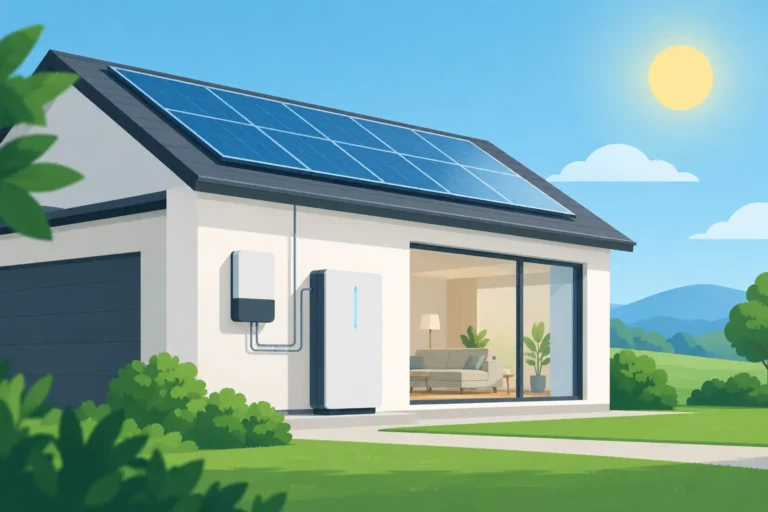
There is a third option worth mentioning because it often gives customers the balance they actually want. A hybrid system stays connected to the grid but also includes battery storage and, in some cases, blackout backup capability.
For many households and businesses, hybrid is where the on grid vs off grid debate becomes more flexible. You can cut grid reliance dramatically, store excess solar for evening use, and maintain some backup protection without committing to the size and cost of a fully off-grid installation.
This is often the right conversation to have if your goal is resilience rather than total disconnection. You may not need to go fully off-grid to achieve far better energy security.
What matters most when choosing
The best system is not the one that sounds the most independent. It is the one that matches the property and performs well over time.
Start with your energy profile. How much electricity do you use, when do you use it, and how critical is uninterrupted power? Then consider the site itself. Roof space, shading, available installation area, access to the grid and future expansion plans all shape the answer.
Budget matters too, but so does the cost of getting it wrong. An undersized off-grid system can be frustrating. An oversized on-grid system with little self-consumption may not deliver the return you expected. Good system design is where the value is created.
That is why tailored advice matters. A proper recommendation should look at your location, usage patterns, property layout and priorities, not just push the same package to every customer. For homes and businesses across Canberra and regional New South Wales, those details can vary a lot from site to site.
If you are weighing up on-grid and off-grid, the most useful next step is not guessing based on someone else’s setup. It is getting clear advice based on how your property actually works. The right solar system should feel like a long-term fit, not a compromise you have to work around.