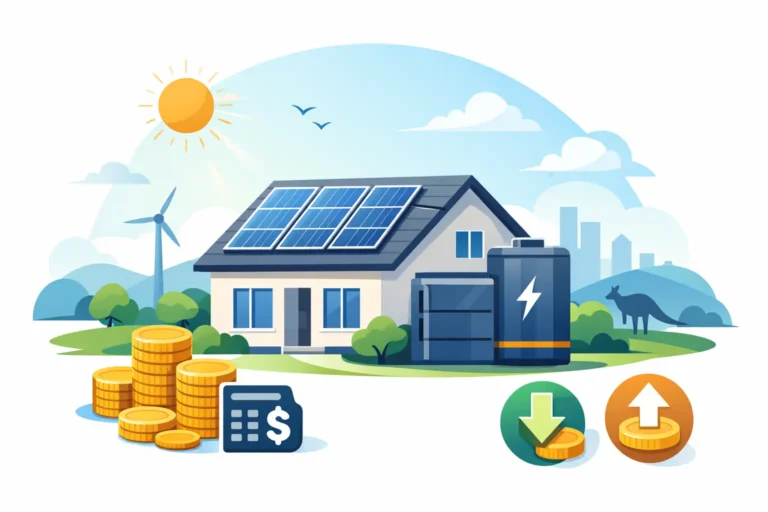
A solar system should lower your bills in a way you can see, not leave you guessing. So, how much do solar panels save? For many Australian households, the answer can be hundreds or thousands of dollars a year, but the useful answer depends on when you use electricity, the size of the system, your roof and your local power rates.
A well-designed system turns sunshine into power for your home or business while you need it. That means less electricity bought from the grid at retail rates, and potentially a credit for excess power exported. The greater the share of solar power you use on-site, the stronger your savings are likely to be.
How Much Do Solar Panels Save Each Year?
There is no responsible single figure for every property. A smaller household with low daytime use will have a different result from a large family running air conditioning, a pool pump and home office equipment. A business that operates through the day may use a very high proportion of its solar generation directly, which can make commercial solar especially compelling.
As a broad guide, a properly sized residential solar system can reduce grid electricity purchases substantially. In many cases, annual bill savings can range from around $1,000 to several thousand dollars. The result may be higher where electricity prices are elevated, daytime consumption is strong and the system is designed around real household usage rather than a generic package.
For a business, savings can be significantly larger because daytime trading hours often align with solar production. Refrigeration, machinery, lighting, computers and air conditioning can all draw power while the system is generating. The financial case should be based on interval data, operating hours and future energy needs, not a headline estimate.
The key distinction is between solar generation and bill savings. Panels may generate a certain number of kilowatt-hours each year, but every kilowatt-hour has a different value depending on whether you use it immediately or send it to the grid.
The Main Factors That Shape Solar Savings
Your daytime electricity use
Using solar power in real time usually delivers the greatest value because it avoids buying that electricity from the grid. If your retail electricity rate is much higher than your feed-in tariff, using a kilowatt-hour in your home is worth more than exporting it.
This does not mean solar only suits people who are home all day. Timers, smart appliances and sensible habits can shift some consumption into daylight hours. Running a pool pump, dishwasher, washing machine or electric hot-water system during the day can improve the return from your system where practical.
System size and design
A larger system can produce more energy, but bigger is not automatically better. The right size considers your annual consumption, daytime load, available roof space, electricity plan, budget and likely future changes such as an electric vehicle, battery or growing family.
Panel orientation and shading matter too. North-facing panels commonly provide strong total annual production, while east- and west-facing arrays can extend generation into the morning and afternoon. For households with power use spread across the day, that broader production profile can be more valuable than chasing the highest midday output alone.
A tailored design also accounts for roof pitch, obstructions, switchboard capacity and the way a system will look and perform on the property. This is where experienced, face-to-face advice can prevent costly assumptions.
Electricity rates and feed-in tariffs
Solar savings rise as the cost of grid electricity rises, provided you can use a meaningful share of the generated power. Feed-in tariffs still contribute to the overall result, but they are typically lower than the price paid for imported electricity.
Your retailer, tariff structure and controlled-load arrangements can affect the calculation. Time-of-use plans may make solar particularly useful when afternoon and evening rates are high, although a battery or careful load scheduling may be needed to capture more of that value after sunset.
Location, weather and shade
Canberra, Sydney, coastal NSW and regional NSW all have favourable solar potential, but output is never identical from one roof to the next. Local weather patterns, seasonal sunlight, roof orientation and shading from trees, neighbouring buildings or vents all influence production.
A good solar estimate uses site-specific assumptions. It should not promise the same output for every 6.6 kW system or ignore shade that affects a roof for part of the day.
Upfront cost, incentives and finance
Savings are only one part of the investment decision. The upfront system cost affects how long it takes for savings to recover your investment. Small-scale technology certificates can reduce the upfront cost of eligible solar installations, subject to current rules and eligibility. Battery incentives and other programs may also be available at different times, but should be checked before making decisions.
Finance can make solar accessible sooner, though interest and fees need to be included when comparing the total cost. Honest projections consider the installed price, expected production, likely self-consumption, export income and future electricity price changes rather than focusing on one attractive number.
A Simple Example of How Savings Work
Imagine a household installs a solar system that generates 9,000 kWh over a year. If the household uses 55 per cent of that energy as it is produced, 4,950 kWh offsets grid purchases. At an assumed retail rate of 35 cents per kWh, that portion is worth about $1,733.
The remaining 4,050 kWh is exported. At an assumed feed-in tariff of 7 cents per kWh, it returns about $284. Under those assumptions, the total annual benefit is around $2,017.
This is an illustration, not a promise. Change the electricity rate, self-consumption level, system output or feed-in tariff and the outcome changes quickly. It does show why using more solar at home is central to getting better value from the system.
Can a Battery Increase Your Solar Savings?
A battery stores surplus solar generation for use later, often during the evening when household demand continues but panels are no longer producing. It can increase your solar self-consumption, reduce grid reliance and provide backup capability when designed with the appropriate equipment.
That does not mean every solar household needs a battery immediately. Batteries add a substantial upfront cost, and their financial return depends on your export tariff, evening usage, electricity plan, battery capacity and whether backup power matters to you. For some customers, installing solar first and adding a battery later is a sensible approach. For others, particularly homes with high evening demand or businesses seeking greater resilience, a battery can be part of the right solution from day one.
Backup power also deserves a clear conversation. Not every battery system keeps every circuit running during an outage. The backup design, selected loads and switchboard configuration determine what will continue operating.
Ways to Get More Value From Your Panels
Once your system is installed, a few practical choices can make a noticeable difference. Monitor production and consumption through the system app so you can spot how much solar is being used versus exported. Schedule flexible loads for daytime where possible, and review your electricity plan periodically as rates and feed-in tariffs change.
Keep panels clear of avoidable shade and arrange inspections if there is a performance concern. Quality equipment and professional installation matter, but ongoing visibility matters too. A system that is monitored is easier to understand and easier to get the best from.
For businesses, energy management can be just as valuable as the panels themselves. Staggering high-load processes, setting HVAC controls carefully and matching operational tasks to solar hours can lift on-site solar use without disrupting productivity.
Get a Savings Estimate Based on Your Property
The most reliable way to estimate savings is to start with your recent electricity bills and, where available, interval usage data. This shows how much electricity you use, when you use it and which system size is likely to suit your goals.
IMS Energy approaches solar planning around the property and the people using it. That means considering roof design, location, future energy plans, preferred equipment and budget before recommending a solution. A clear savings estimate should explain the assumptions behind it, including expected production, self-consumption and export rates.
Solar is not a magic fix for every bill, and savings will vary from year to year. But with a system designed for your actual energy habits, solar can turn a regular household or business expense into a long-term investment in lower running costs and greater energy confidence.