A business can have plenty of solar generation on its roof and still buy expensive electricity late in the day. That gap is where battery storage for businesses can make a meaningful difference. Rather than exporting surplus solar for a modest credit, a battery stores available energy for use when your site needs it most.
For a café facing evening refrigeration loads, a workshop running equipment after solar production drops, or an office wanting protection from short outages, the value is not simply having a battery. It is having a system designed around how the business actually uses power. The right solution can lower grid purchases, reduce exposure to peak pricing and support more reliable operations. The wrong one can add capital cost without delivering the savings expected.
What business battery storage actually does
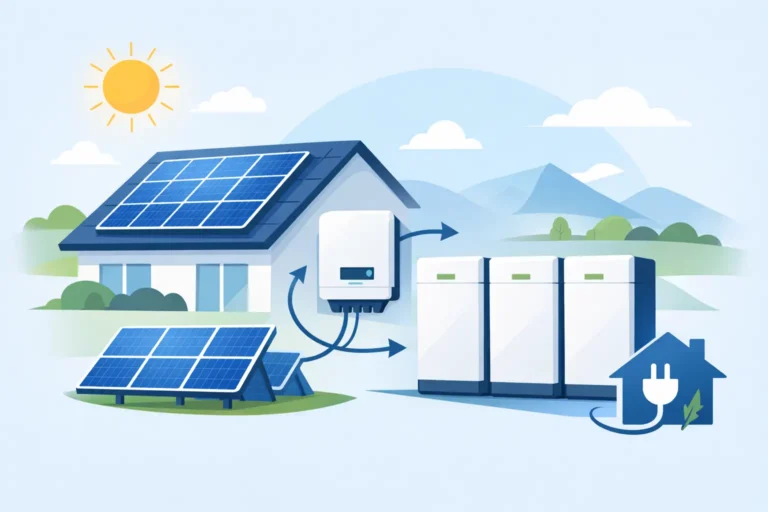
A commercial battery stores electricity generated by a solar system or, in some cases, electricity drawn from the grid at a lower-cost time. It then discharges that energy according to settings built into the system design. Those settings may prioritise self-consumption of solar, management of short high-demand periods, backup power for selected circuits, or a combination of these goals.
The basic principle is straightforward, but commercial outcomes vary widely. A business that uses most of its electricity between 9am and 3pm may gain more from additional solar capacity than from a large battery. A site with substantial late-afternoon demand, high demand charges or frequent outages may see a much stronger case for storage.
That is why energy data matters. Electricity bills provide a starting point, but interval data gives a clearer picture of when power is consumed, how high demand spikes rise and whether solar is currently being exported. A tailored assessment turns those patterns into a practical battery size and operating strategy.
Where battery storage for businesses creates value
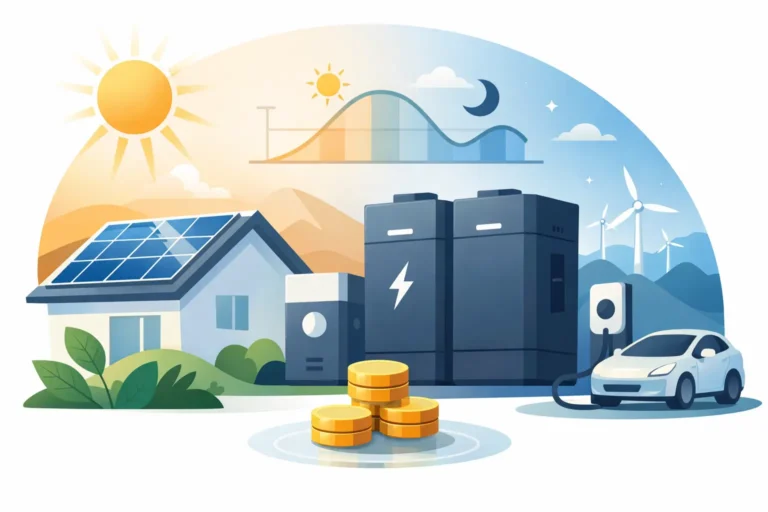
The strongest business case usually comes from several benefits working together, not one headline saving. Storing daytime solar for use after sunset can reduce the amount of electricity purchased from the grid. For businesses on tariffs with demand charges, a battery may also reduce short, costly spikes in site demand by discharging at the right moment.
This is often called peak shaving. Consider a business where several pieces of equipment start at once, briefly pushing demand to a high level. Even if that peak lasts only a short time, it can influence the network component of the bill. A well-configured battery can soften those peaks, although it needs enough power capacity, measured in kilowatts, to do so. Battery energy capacity, measured in kilowatt-hours, tells you how long it can keep supplying energy.
Resilience is another consideration. Some businesses cannot afford even a brief interruption to point-of-sale systems, refrigeration, communications, security or essential production equipment. A battery with backup capability can keep nominated loads operating during an outage. However, backup is not automatic with every battery installation, and it does not necessarily mean the entire premises can run as usual.
For many operators, there is also a brand and sustainability benefit. Using more of the solar power generated on site demonstrates a practical commitment to reducing grid reliance and emissions. It can support customer expectations, tender requirements and internal sustainability targets, while still being grounded in a sound financial decision.
Start with your load profile, not a battery size
It is tempting to ask for the biggest battery that fits the budget. In commercial solar, bigger is not always better. If the battery regularly fills before midday and has no useful demand later, or if it remains mostly empty because solar surplus is limited, capacity is being underused.
A good design begins with a few direct questions. When does your business consume the most electricity? How much solar is produced and exported across a typical day? Are there sharp demand peaks? Which operations are essential during a blackout? And will your electricity needs change as the business grows, adds equipment or moves towards electric vehicles?
Seasonality also matters. A hospitality venue, irrigation operation or tourism business may have very different consumption patterns across the year. Solar output changes with weather and daylight hours too. Designing from one unusually high bill can lead to an unsuitable system.
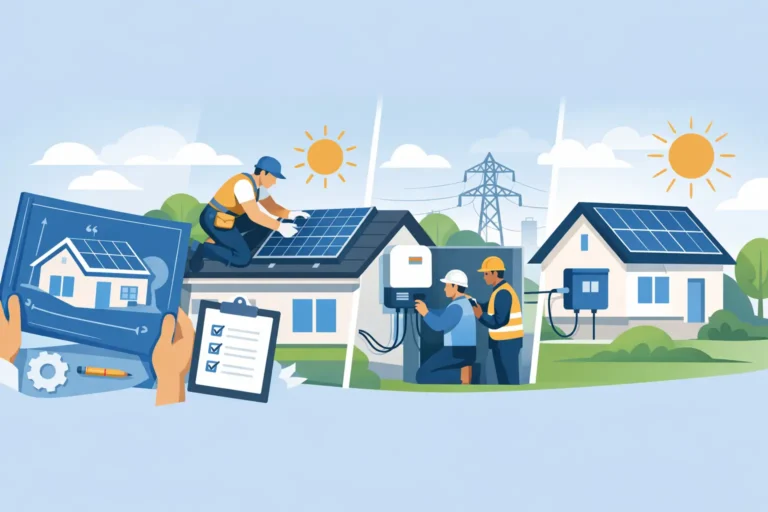
An experienced installer should model the proposed solar and battery system against your consumption data, tariff structure, roof or ground-space constraints and future plans. The aim is not to promise a single universal payback period. It is to show the assumptions clearly, identify the likely savings drivers and explain where results may vary.
The decisions that shape performance
Capacity and power are different things
A battery with high kilowatt-hour capacity holds more energy, but it may not have enough kilowatt power output to manage a large machinery start-up or a sharp demand spike. Conversely, a high-power battery with limited stored energy may handle brief peaks well but not carry essential loads through a longer outage.
Matching both figures to the site is critical. It is also worth considering whether a modular system offers a sensible path to future expansion, rather than paying upfront for capacity you may not use for several years.
Backup needs careful planning
If continuity during outages is a priority, identify the circuits that genuinely need to stay on. This might include refrigeration, internet, lighting, security, servers or a selected production process. Separating essential loads from non-essential loads can make a backup system more practical and cost-effective.
Ask how the system behaves during a grid outage, whether solar can continue charging the battery, how quickly backup supply activates and what limits apply. Air conditioning, large motors and electric heating can consume stored energy quickly, so expectations need to be realistic.
Tariffs can change the numbers
Commercial electricity pricing is more complex than a simple cents-per-kilowatt-hour comparison. Time-of-use rates, demand charges, export rates and network arrangements can all affect the value of stored energy. A battery that looks compelling under one tariff may deliver a different result after a tariff change.
This does not mean storage is too complicated to assess. It means the proposal should be based on your actual bill structure and reviewed as your energy arrangements evolve. Honest advice includes explaining when solar alone, efficiency upgrades or operational changes should come before a battery.
Choosing equipment and an installation partner
A commercial battery is a long-term piece of electrical infrastructure. Product quality, safety design, warranty conditions, monitoring and local support deserve as much attention as the upfront price. The system must be compatible with the solar inverter arrangement, site switchboard and intended backup configuration.
Installation planning can be particularly important for businesses with limited space, public access areas, noise concerns or specialised electrical loads. The battery location needs to meet relevant requirements while allowing suitable access for installation, inspection and future servicing. At some sites, switchboard upgrades or additional protection equipment may be required.
Monitoring is equally valuable after installation. It allows the system’s performance to be checked, helps identify unusual consumption and shows whether the operating strategy is delivering the intended result. A battery should not be a set-and-forget purchase. As a business changes, its settings may need to change too.
For Canberra and NSW businesses, local conditions, network requirements and site layout can influence the final design. Working with a provider that takes the time to inspect the site and explain the options face to face can prevent costly assumptions. IMS Energy approaches commercial storage as part of a complete solar plan, with equipment and system design selected around the customer’s energy goals rather than a standard package.
When a battery may not be the first investment
Battery storage is not the right first move for every business. If a site has poor energy efficiency, limited solar generation or most usage occurs while solar is already producing, better returns may come from reducing waste, improving equipment controls or expanding solar capacity.
It may also be sensible to stage the investment. Installing a battery-ready solar system now can provide flexibility to add storage when consumption grows, tariffs change or backup needs become more pressing. The key is ensuring that future expansion has been considered in the original design.
The most useful next step is to gather recent electricity bills and interval data, then compare a few realistic scenarios: solar only, solar with a right-sized battery, and a staged approach. A clear proposal should make the trade-offs visible. When storage is designed around the way your business works, it becomes more than a battery on the wall – it becomes a practical tool for controlling energy costs and keeping the lights on when they matter most.