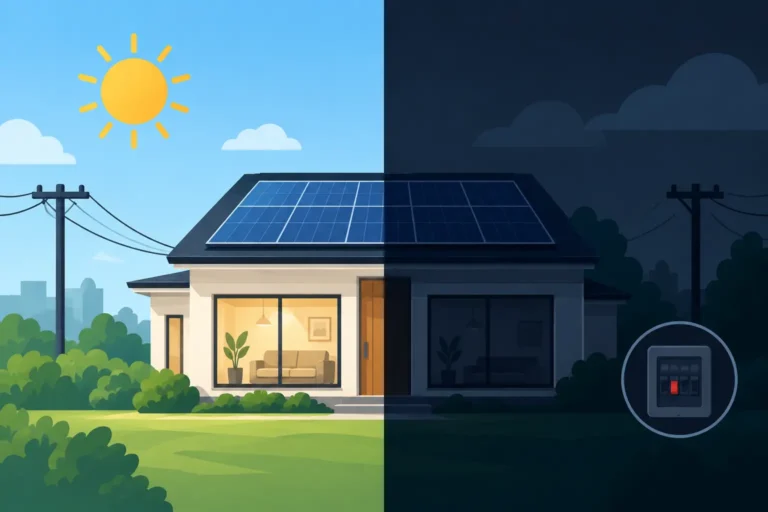
A well-designed off-grid system is not simply solar panels plus a battery. It is a power supply built around the way you actually live or operate. Learning how to design off grid power starts with an honest look at your energy use, your site and the level of reliability you need when the weather is poor or demand suddenly rises.
For a remote home, farm shed, workshop or business site, the goal is straightforward: dependable electricity without relying on the grid. Reaching that goal takes careful planning. A system that looks generous on paper can still fall short if it has not allowed for winter production, high-starting loads or several overcast days in a row.
Start with the loads, not the solar panels
The most common mistake in off-grid planning is choosing a panel or battery size first. Your energy demand should lead every decision that follows.
Start by listing every appliance, machine and electrical circuit the system will support. Include everyday loads such as refrigeration, lighting, pumps, internet equipment, televisions, cooking appliances and air conditioning, then account for occasional but significant users such as welders, pressure pumps, power tools or electric vehicle charging.
There are two figures that matter. The first is energy consumption, measured in kilowatt-hours or kWh, which tells you how much electricity the property uses across a day. The second is peak demand, measured in kilowatts or kW, which tells you how much power may be needed at one moment.
A home may use a modest amount of energy over 24 hours but still need a capable inverter if a bore pump, kettle and air conditioner can run at the same time. Likewise, a workshop with intermittent machinery may need strong surge capacity even if its average daily consumption is low.
Where possible, use existing electricity bills, smart meter data or appliance ratings to build the picture. For a new build or a site with no reliable data, a detailed load assessment is worth the effort. Guessing low is rarely a saving once the system is installed.
How to design off-grid power around real conditions
Off-grid solar must be designed for the least favourable periods, not just bright summer days. Across Canberra, regional NSW and other parts of Australia, winter brings shorter daylight hours and lower solar production. Local weather patterns, shade, roof orientation and dust can also make a meaningful difference.
A suitable design considers the site’s solar resource throughout the year. North-facing panels generally deliver strong annual output in Australia, but the best orientation and tilt can vary with your roof shape, land availability and winter energy needs. A ground-mounted array may offer more flexibility than a roof installation, particularly where a home is shaded or the roof cannot accommodate enough panels.
It is also wise to think about future shade. A small tree may not affect production today, yet become a problem in five years. Nearby buildings, ridgelines and even seasonal shadows should be assessed before finalising the array location.
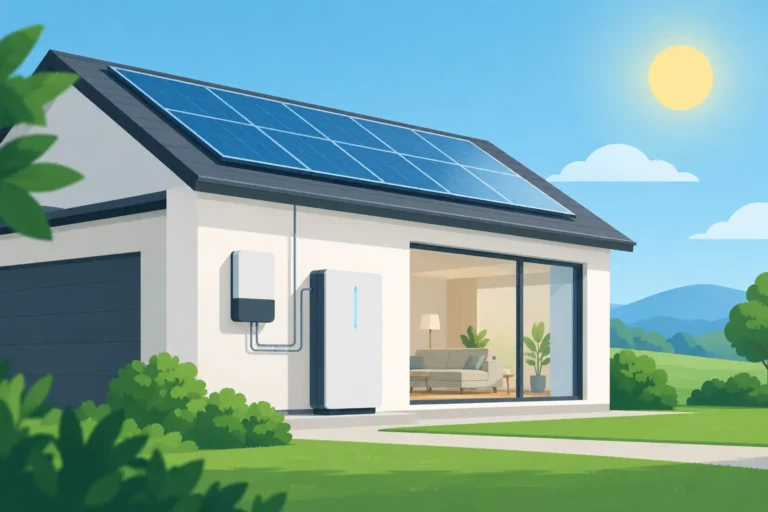
Solar generation is only one part of the equation. A practical off-grid design usually includes enough battery storage to carry normal overnight use and provide a sensible buffer for cloudy conditions. The right level of autonomy depends on the property and your expectations. A lightly occupied weekend cabin may accept tighter energy management, while a family home, medical requirement or business operation generally calls for greater reserve.
Size the battery for usable energy, not just a headline number
Battery capacity is often discussed as a single kWh figure, but usable capacity and operating strategy matter just as much. Batteries are not normally taken from 100 per cent to empty every day. Leaving a reserve can support battery life and protect the property during extended poor weather.
The appropriate battery size depends on daily consumption, how many days of stored energy you want, the performance of the battery and inverter, and whether a backup generator is part of the plan. More storage can provide comfort and resilience, but it also increases upfront cost. Oversizing a battery without enough solar to recharge it through winter is not an efficient outcome.
For many properties, the strongest value comes from balancing solar generation, battery storage and backup generation rather than trying to make one component do all the work. A generator may only run occasionally, but it can reduce the need to purchase an extremely large battery bank for rare weather events. It also provides useful insurance during maintenance or unexpected equipment failure.
Battery location deserves attention too. Equipment should be installed in a suitable, protected area with appropriate clearances, ventilation where required and easy access for servicing. Heat can affect battery performance, so a tidy, sheltered plant area is more than an aesthetic consideration.
Choose an inverter that handles peak and surge loads
The inverter is the working centre of an off-grid system. It converts stored DC electricity from the batteries into the AC power used by your appliances, while managing solar charging and generator integration in many system configurations.
Its continuous output needs to cover expected simultaneous loads, while its surge rating needs to cope with motors and compressors starting. Pumps, refrigerators, air conditioners and workshop equipment can draw substantially more power for a brief period at start-up than they use while running.
This is where a tailored design matters. If a property has a large bore pump or machinery with high starting current, it may need a larger inverter, multiple inverter units or changes to how loads are managed. Soft starters, efficient appliances and load scheduling can sometimes lower the required system size and improve day-to-day performance.
It is also worth separating essential and discretionary circuits. During a prolonged cloudy period, you may want refrigeration, communications, lighting and water pumping protected while non-essential loads are limited. Good system design gives you options instead of forcing an all-or-nothing compromise.
Plan for backup power and energy management
Even a carefully sized solar and battery system will face periods of low generation. Backup generation is not a sign that an off-grid system has failed. It is part of a sensible resilience plan, especially for year-round homes and operational sites.
The generator should be compatible with the inverter and sized to support battery charging and critical loads efficiently. An undersized generator can struggle to charge batteries properly, while an oversized unit may waste fuel when operating at light load. Fuel availability, noise, servicing requirements and automatic start capability should all be considered.
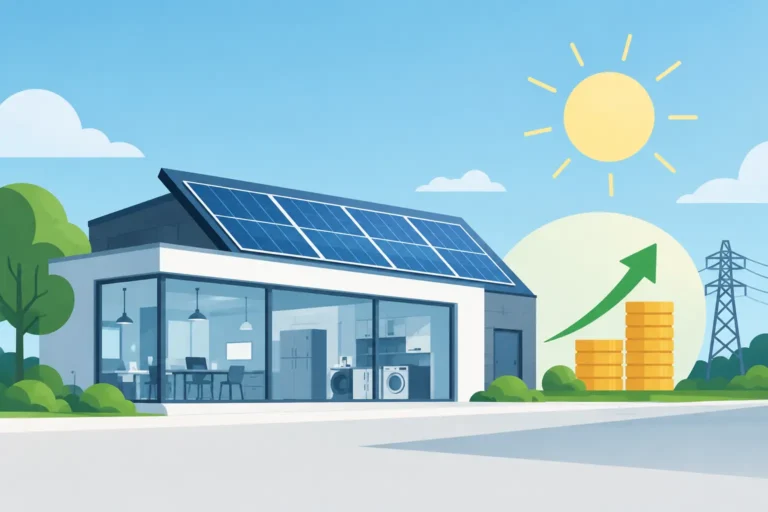
Energy management plays an equally important role. Monitoring lets you see solar production, battery state of charge and major loads in real time. That information helps householders make smart decisions, such as running laundry, pumping or charging tasks during the middle of a sunny day rather than after sunset.
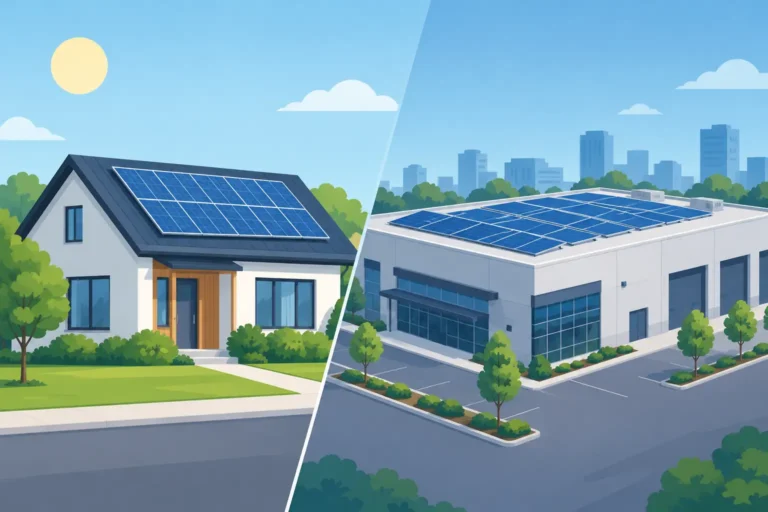
For commercial sites, a clear operating plan can prevent avoidable demand spikes. Shifting non-critical processes, replacing inefficient equipment and setting rules around high-load machinery may reduce the capital cost of the off-grid system from the outset.
Build efficiency into the design
The cheapest kilowatt-hour is the one you do not need to generate or store. Before adding more panels and batteries, review the appliances and systems that will consume the most electricity.
Efficient refrigeration, LED lighting, well-designed hot water systems and sensible heating and cooling choices can substantially reduce off-grid demand. Electric resistance heating, old freezers and oversized pumps are often costly loads in a standalone system. For some properties, gas, wood heating or solar thermal may remain practical options, depending on the site and the owner’s priorities.
This does not mean an off-grid home must feel restrictive. It means the electrical design should reflect how the property will be used. A family that wants all-electric cooking, ducted air conditioning and electric vehicle charging can absolutely work towards off-grid power, but those choices need to be included in the load modelling from day one.
Consider the whole site before installation
A high-quality off-grid system also requires sound electrical infrastructure. Cable runs, switchboards, earthing, array mounting, equipment access and future expansion should be planned early, particularly on rural or newly built properties.
Long cable distances can create voltage drop and add cost. A shed that houses the battery and inverter may be convenient, but only if the distance to the home and solar array is properly accounted for. Flood risk, bushfire exposure, pests and security may also influence where equipment is located and how it is protected.
Approvals and compliance requirements vary by location and installation type. Working with an experienced solar provider and appropriately qualified electrical professionals helps ensure the system is designed and installed to applicable Australian standards, rather than assembled as a collection of components.
Get a design that leaves room to grow
Your electricity needs may change. A growing family, new workshop equipment, a pool pump or an electric vehicle can alter the load profile quickly. Discuss likely future changes during the design stage, even if they are not part of the initial installation.
Sometimes it makes sense to install capacity for expansion from the beginning. In other cases, a staged approach protects the budget while allowing for additional solar, batteries or inverter capacity later. The right choice depends on the cost of upgrading later, the certainty of future demand and the importance of uninterrupted power.
Off-grid power works best when it is treated as a long-term energy system, not a box of equipment. A tailored assessment gives you clearer expectations about cost, performance and the habits that will keep your property powered through every season. The right design should give you confidence to use your energy well, while knowing there is a practical plan for the days the sun does not cooperate.