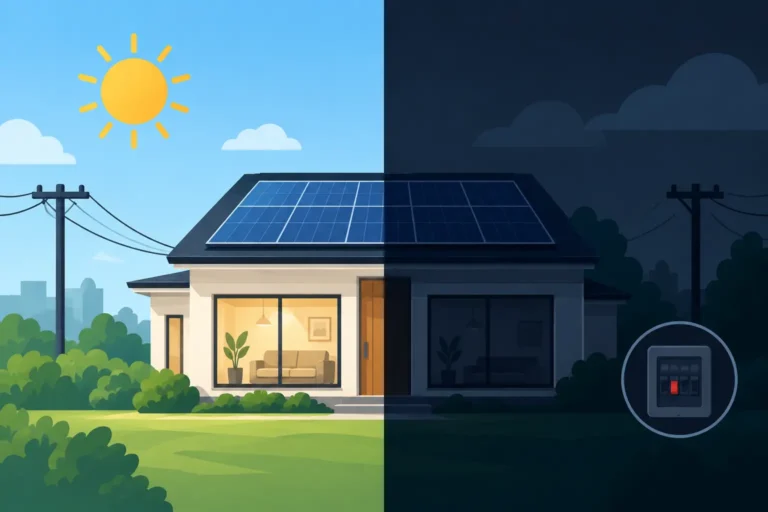
A battery earns its place when it changes how your household uses energy, not simply when it looks good on the wall. In this Tesla Powerwall review, we look at what the system can realistically deliver for Australian homes: more use of your own solar, useful backup during outages and clearer visibility over where your power is going.
Tesla has helped make home batteries familiar to homeowners who may once have seen them as specialist equipment. Powerwall is a premium, well-known option with a clean design and capable software. But it is not automatically the right battery for every property. Your existing solar system, evening energy use, switchboard, tariff, backup expectations and budget all matter.
Tesla Powerwall review: the practical strengths
At its core, a Powerwall stores surplus solar energy generated during the day so it can be used later, when solar production falls and grid electricity is often more expensive. For a family that is out during daylight hours but cooks, cools or heats the home in the evening, that shift can make a meaningful difference to grid reliance.
The commonly specified Powerwall battery capacity is 13.5 kWh. In practical terms, that is a substantial amount of stored energy for a typical household, although it will not necessarily cover every appliance for an entire night. A home running ducted air conditioning, electric heating, pool equipment and an EV charger can use energy quickly. A more modest household load will make the stored energy stretch much further.
Its output capability is another reason Powerwall remains popular. It is designed to support normal household loads rather than just a few emergency circuits, subject to the system design and the model installed. Newer Powerwall configurations offer stronger power delivery than earlier versions, which can be valuable for homes with higher-demand appliances. The right question is not simply, “How many kilowatt-hours do I get?” It is, “What do I want to run at the same time?”
Tesla’s app is a genuine strength. It gives homeowners an easy view of solar generation, household consumption, battery charge and grid use. That visibility helps turn a battery from a passive piece of equipment into something you can understand and manage. Many customers find that once they can see their evening load, they naturally make smarter choices about timers, pool pumps, charging and high-use appliances.
The system can also be configured around different priorities, such as maximising solar self-consumption or keeping a portion of the battery in reserve for an outage. That flexibility is particularly useful in areas where storm-related interruptions or regional grid issues are a concern.
Backup power is valuable, but it needs careful design
Backup capability is often the deciding factor for a Powerwall. With the required backup hardware and correct installation, the battery can disconnect from the grid during an outage and continue supplying selected or supported household loads.
This is not the same as having unlimited power. The battery has a finite stored capacity and a maximum output. If every major appliance starts at once, demand can exceed what the system is designed to supply. An experienced installer will discuss which loads are essential, how your switchboard is arranged and whether whole-home backup or a dedicated backup circuit is the sensible approach.
For some households, keeping refrigeration, lighting, internet, a few power points and selected heating or cooling operating is enough. For others, especially regional homes, properties with medical equipment or businesses working from home, a higher level of backup may be worthwhile. The design needs to match the consequence of losing power, not just the appeal of the feature.
Where a Tesla Powerwall may not be the best fit
Powerwall is a premium product, and its installed cost reflects that. A battery should be assessed as part of the full energy system, not as an impulse purchase based on its headline capacity. If a home has a small solar array, significant shade or low daytime generation, there may not be enough surplus energy to charge the battery consistently. In that situation, adding or optimising solar first may produce better value.
It may also be less compelling for households that already use most of their solar during the day. Retirees at home, families with flexible work patterns, or businesses operating in daylight hours can have strong solar self-consumption without a battery. A battery can still provide backup and greater independence, but the bill-saving case may be less straightforward.
Electricity plans matter as well. Some tariffs make stored energy more valuable during the evening peak. Others offer lower overnight rates that can change the calculation. Feed-in tariffs are generally much lower than retail electricity rates, which is one reason batteries are attractive, but the financial result is always specific to the household.
If you are considering a virtual power plant, read the program terms closely. Some arrangements can offer credits or other benefits, but they may also influence when the battery is charged or discharged. It is worth deciding how much control you want over your stored energy before enrolling.
Powerwall 2, Powerwall 3 and existing solar
The Powerwall name covers more than one generation, and this matters when comparing quotes. Powerwall 2 has been widely installed across Australia and is commonly paired with existing solar through a compatible battery setup. Powerwall 3 brings a different architecture, including an integrated solar inverter and the potential for expansion, which may be appealing for new solar-and-battery installations or homes planning for future demand.
That does not mean the newer product is automatically better for every site. A homeowner with a relatively new, high-quality solar inverter may need a different approach to someone replacing an older system or building a new home. Roof orientation, panel capacity, inverter compatibility, switchboard condition and future EV charging plans all affect the best design.
A good proposal should clearly explain the equipment being supplied, the usable battery capacity, expected output, backup scope, whether switchboard work is included and any assumptions behind the savings estimate. If those details are vague, it is difficult to compare one battery quote with another fairly.
What to ask before choosing a Powerwall
Start with your actual consumption data, ideally across a full year. Smart-meter data can reveal the times when your home draws most heavily from the grid and whether a single battery is likely to cover a useful share of that demand. It also helps identify seasonal differences: winter heating and summer cooling can produce very different load patterns.
Then consider your future, not only your current bill. An EV, electric hot water system, induction cooking, pool heating or reverse-cycle air conditioning can materially increase electricity use. A battery that seems generous now may have a different role in three years. Conversely, if you expect to be away frequently or your energy use is modest, a smaller storage solution may be more appropriate.
Ask how the system will behave in an outage, what loads will remain available, and how solar will recharge the battery while the grid is down. Confirm the warranty terms that apply to the quoted model and installation, including the workmanship support available after commissioning. Premium equipment deserves dependable planning and service behind it.
Is Tesla Powerwall worth it?
For the right Australian household, Powerwall is a strong option. It combines useful storage capacity, capable backup potential, an excellent monitoring experience and a polished product design. It is particularly well suited to homeowners with a healthy amount of surplus solar, high evening consumption and a clear desire for greater resilience when the grid goes down.
Its value is less certain where solar production is limited, daytime self-consumption is already high, or the budget would be better spent increasing panel capacity first. The payback period should never be treated as a fixed number because power prices, usage habits, tariffs and weather all influence it.
The most useful next step is a tailored assessment of your solar generation, energy use and backup priorities. IMS Energy can help turn those details into a system recommendation that suits your home, your budget and the way you actually live with energy.