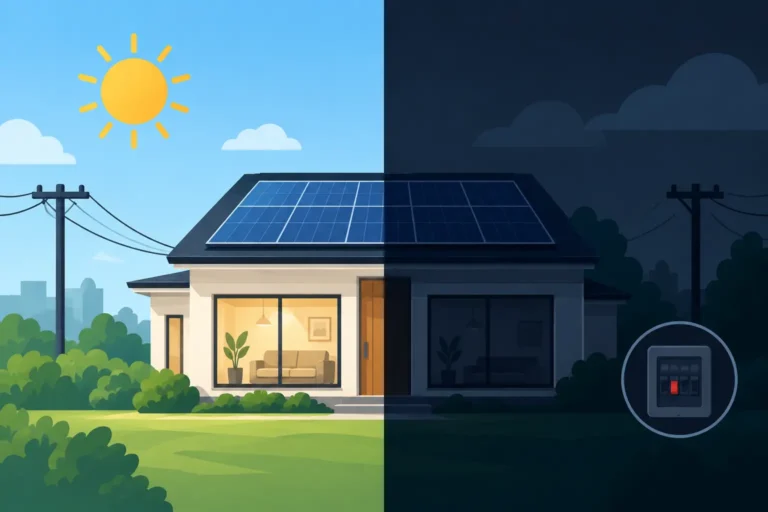
A solar quote can look straightforward until you reach the inverter choice. In the string inverter vs microinverter decision, the right answer is not simply the most expensive option or the newest technology. It is the system that suits your roof, energy use, future plans and budget for the long term.
Your panels produce direct current (DC) electricity, while your home or business uses alternating current (AC). The inverter performs the essential conversion between the two. It also helps manage system performance, monitoring and grid requirements. Because it has such an influential role, selecting the right inverter architecture deserves the same care as selecting the panels.
String inverter vs microinverter: the core difference
A string inverter is a central unit, usually installed on a wall near the switchboard, garage or meter box. Panels are connected in groups called strings, with the combined DC power sent to the inverter for conversion to AC power.
Microinverters are smaller inverters installed beneath each solar panel. Each panel converts its own DC electricity to AC on the roof before the power travels down to your switchboard.
Neither approach is automatically better. A well-designed string inverter system can be an excellent, efficient investment for a clear, simple roof. Microinverters can be particularly valuable where a roof has multiple orientations, partial shading or panels that cannot all perform under the same conditions.
When a string inverter makes sense
For many Australian homes, a string inverter is the practical choice. It is a proven technology, widely used across residential and commercial solar, and generally comes with a lower upfront cost than a comparable microinverter system.
It works best when most panels face the same direction, sit at a similar tilt and receive consistent sunlight. Think of a broad north-facing roof with little shade from trees, chimneys, satellite dishes or neighbouring buildings. In this setting, panels in a string tend to produce at similar levels, allowing the inverter to work efficiently.
String inverters also make maintenance more straightforward. The primary electronic component is accessible at ground level rather than located under panels. If a replacement is needed years down the track, a technician can usually assess and change the unit without removing rooftop equipment.
The shading consideration
The trade-off is that a conventional string behaves somewhat like a team: when one panel’s output drops, the performance of other panels in that string may be affected. Modern string inverter designs and multiple maximum power point trackers can reduce this issue, especially where panels are separated across two roof faces. However, they cannot always eliminate the impact of regular, moving shade.
A little early-morning or late-afternoon shade may not justify a more complex system. Persistent shade through the middle of the day, when solar production is strongest, deserves closer attention. The same applies to roofs where a growing tree will increasingly affect production over time.
Cost and value
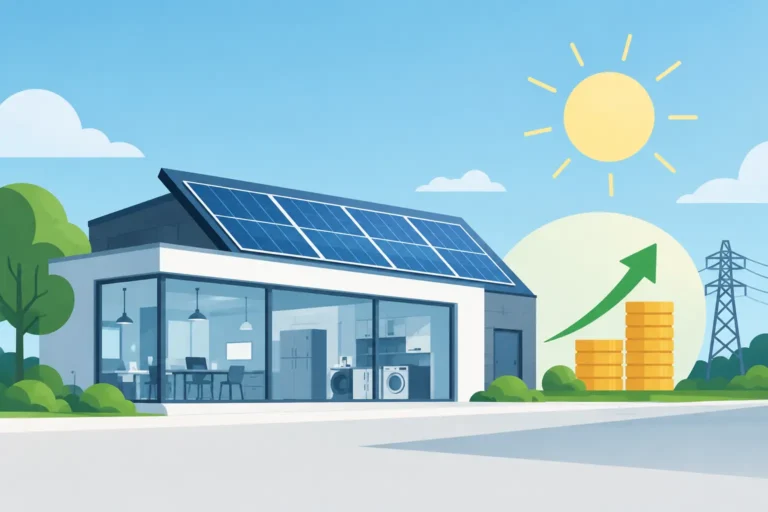
A string inverter system typically costs less initially because it uses one main inverter instead of an inverter beneath every panel. This can leave more room in the budget for higher-quality panels, a larger system, battery readiness or electrical upgrades where required.
That lower upfront price does not mean choosing the cheap option. Quality matters. The best value comes from matching reputable equipment with careful system design, correct installation and a clear understanding of warranty support. For a straightforward roof, this often delivers very strong long-term savings.
When microinverters are worth considering
Microinverters allow each panel to operate independently. If one panel is shaded or producing less due to its position, the others can continue working at their own optimum level. This makes them a strong option for complicated rooftops.
They can be particularly useful where panels need to face east, west and north, where roof sections have different pitches, or where there is unavoidable shade from structures and trees. They are also worth considering for homes with smaller roof spaces that require panels to be spread across several sections to achieve a useful system size.
Panel-level monitoring is another attraction. Depending on the system selected, homeowners can see how individual panels are performing rather than viewing only the overall system output. This can make fault identification easier and provide useful reassurance where performance conditions vary across the roof.
What to weigh up before paying more
Microinverters generally have a higher upfront cost. There are more electronic components in the system, and each one must be installed beneath a panel. While this architecture offers useful performance benefits in the right circumstances, those benefits need to be meaningful enough to justify the additional investment.
Maintenance is also different rather than necessarily harder. A fault at panel level can be identified through monitoring, but access may require a technician to work on the roof and temporarily remove a panel. Product warranty lengths can be attractive, but it remains important to understand what is covered, how labour is handled and who will support you if an issue arises.
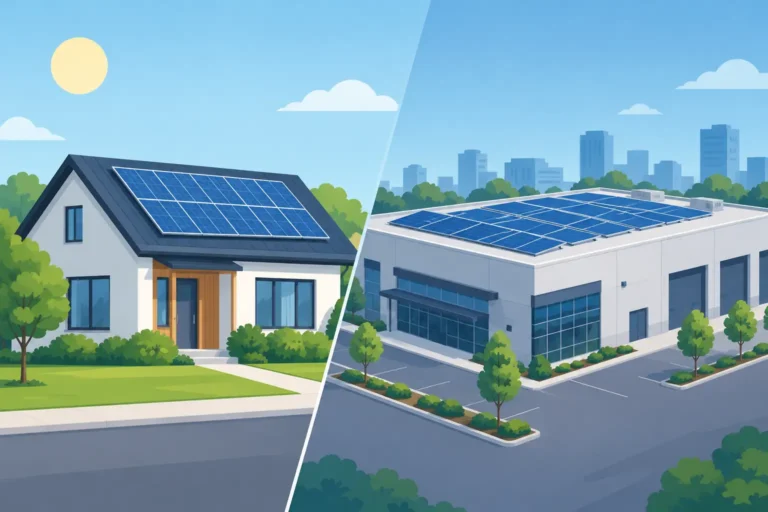
For a large, unshaded commercial roof with rows of similarly oriented panels, microinverters may add cost without delivering proportional gains. For a shaded family home with several roof angles, they can produce a better outcome than a standard string layout.
Battery plans can affect the decision
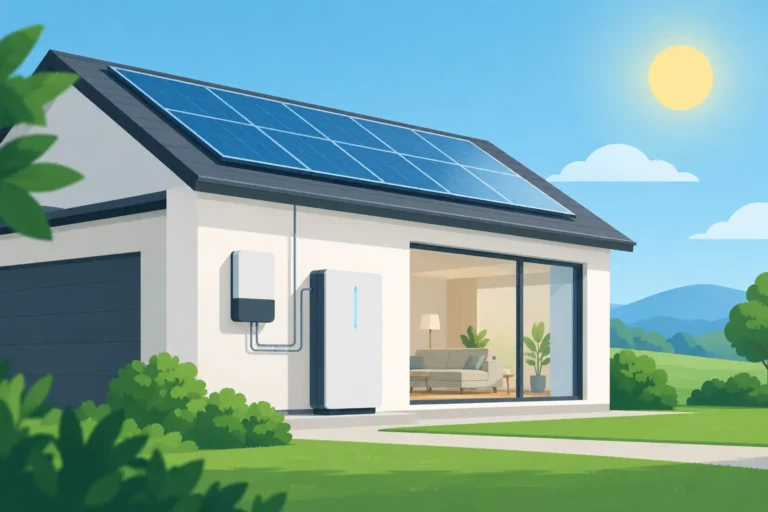
If a battery is part of your plan now, or likely in a few years, raise it early. Batteries, solar inverters, backup circuits and switchboard capacity need to be designed as one energy system, not added as an afterthought.
String inverter systems are commonly paired with batteries through either DC-coupled or AC-coupled designs, depending on the equipment and the project goals. Microinverter systems already produce AC at the panel, so battery additions are generally AC-coupled. Both can work well, but the preferred arrangement depends on your load profile, desired backup capability, existing equipment and whether the installation is new or an upgrade.
If keeping selected appliances running during a blackout matters to you, do not assume every battery system provides this automatically. Backup power requires appropriate design, compatible hardware and a clear decision about which circuits should be supported. This is especially valuable for regional properties, home offices, refrigeration, medical equipment or businesses where downtime carries a real cost.
Roof design matters more than the sales pitch
The most useful comparison begins with the site, not a product brochure. A quality solar assessment should consider usable roof area, orientation, tilt, shading across the year, panel layout, cable pathways, switchboard condition and your actual electricity consumption.
For businesses, it should also account for daytime operating loads, tariff structure and future equipment such as EV chargers, refrigeration, pumps or expanded production. A system that produces the most kilowatt-hours is not always the one that creates the best financial outcome. Matching generation to when you use power can be just as important.
In Canberra and across NSW, seasonal sun angles can make shade assessments particularly worthwhile. A roof that appears clear in summer may be affected by longer winter shadows. Honest advice should distinguish between a minor compromise and a layout issue that will materially affect returns.
A practical way to choose
Choose a string inverter when your roof is relatively simple, most panels can share similar conditions and keeping upfront costs efficient is a priority. It is a reliable solution for a large share of residential and commercial installations.
Consider microinverters when shade, multiple roof directions or varied roof sections would otherwise limit the system design. They can also suit owners who place high value on individual panel monitoring and want flexibility in how panels are distributed across the roof.
There is also a middle ground. Power optimisers can be paired with some string inverter systems to provide panel-level performance management while retaining a central inverter. They are not the right answer for every roof, but they demonstrate why a proper design conversation is more useful than treating solar as a choice between only two technologies.
Focus on the outcome, not just the hardware
A good solar system should reduce your reliance on grid electricity, fit the property cleanly and give you confidence that the equipment will be supported well after installation. The inverter choice is one part of that outcome, alongside panel quality, system size, electrical design, warranties and the installer’s ongoing service.
IMS Energy approaches every system as a tailored energy solution, because roofs and power bills rarely behave the same way from one property to the next. Ask for the expected production, shading assumptions, inverter rationale and battery options to be explained in plain language. The best choice is the one you can understand, afford and rely on for years to come.