A solar battery can be the difference between a system that simply generates power during the day and one that gives you more control over when and how you use it. If you are working out how to choose solar battery storage, the real question is not which brand sounds best. It is which battery suits your property, your energy habits and your long-term goals.
That matters because a battery is not a small add-on. It is a serious investment, and the wrong choice can leave you paying for storage you rarely use, or buying a system too small to make a noticeable difference. The best battery setup is usually the one that feels well matched rather than oversized.
How to choose solar battery for your needs
The first step is getting clear on what you want the battery to do. Some households want to store excess solar and use it after sunset to reduce grid use. Others care most about backup during outages. For some businesses, the priority is managing evening loads or reducing peak demand. These are different jobs, and they can point to different battery sizes and system designs.
If your main goal is lowering power bills, then your battery should be sized around your evening and overnight usage, not just the total size of your solar array. A large home with high daytime consumption may benefit more from extra solar generation than extra battery storage. On the other hand, a household that is empty during the day and active at night may get stronger value from adding storage.
For regional properties and off-grid sites, resilience can matter just as much as savings. In those cases, battery choice is tied closely to backup circuits, generator support, seasonal loads and how much autonomy you want during poor weather. That is why a proper assessment matters more than a quick online comparison.
Start with your energy use, not the battery brochure
Battery marketing often focuses on headline capacity, but capacity on its own does not tell you enough. You need to look at when you use electricity, how much you use after solar production drops off, and whether your usage is steady or highly variable.
A family that runs air conditioning into the evening, cooks on electric appliances and charges an EV at night has a very different load profile from a couple who use most of their power in the middle of the day. A café, workshop or office also has its own pattern. The better your installer understands that pattern, the easier it is to recommend a battery that will actually earn its keep.
This is also where future planning comes in. If you are likely to buy an EV, add ducted air conditioning, electrify hot water or expand business operations, that should be factored in now. Choosing a battery based only on today’s usage can make the system feel undersized sooner than expected.
Capacity and usable capacity are not the same
One of the most common points of confusion is the difference between total capacity and usable capacity. Total capacity is the amount of energy the battery can technically hold. Usable capacity is the amount you can actually draw from it in normal operation.
That distinction matters. Two batteries may look similar on paper, but if one allows more usable storage, it may provide better real-world value. This is one reason why comparing batteries by price alone can be misleading.
Power output matters too
Capacity tells you how long a battery may last. Power output tells you how much it can run at once. If you want to run several appliances together during a blackout, or if your home has larger loads, output is just as important as storage size.
A battery with generous capacity but limited output may still struggle to support key equipment simultaneously. That is particularly relevant for homes with pumps, larger air conditioning systems or business equipment that draws more power on startup.
Backup power changes the brief
Not every solar battery provides the same backup capability. Some can keep selected essential circuits running during a blackout. Others are mainly designed for energy shifting and need additional components for backup operation. Some systems can support whole-home backup in the right conditions, while others are better suited to a limited backup setup.
This is where expectations need to be realistic. If your goal is to keep the fridge, lights, internet and a few power points going, that is a different design from trying to maintain full air conditioning, electric cooking and every circuit in the building. The broader the backup requirement, the more carefully the battery, inverter and switchgear need to be selected.
For customers in areas where outages are more common, backup design should never be treated as an afterthought. It should be discussed upfront so the system is built around what matters most.
Battery lifespan, warranty and cycle performance
A solar battery is a long-term asset, so you want to understand not just how it performs on day one, but how it is expected to age. Most quality batteries come with performance warranties that refer to years, cycles or retained capacity over time.
A longer warranty is helpful, but it is not the only thing worth checking. The more useful question is how the battery is expected to perform under your pattern of use. A battery that cycles heavily every day may age differently from one used mainly for occasional backup. Product quality, thermal management and installation standards all play a part.
This is one reason premium equipment often makes sense. Better components, stronger support and proven manufacturer backing can matter more over ten years than a lower upfront price. Cheap storage can become expensive if performance drops early or support is hard to access when something goes wrong.
Compatibility with your solar system
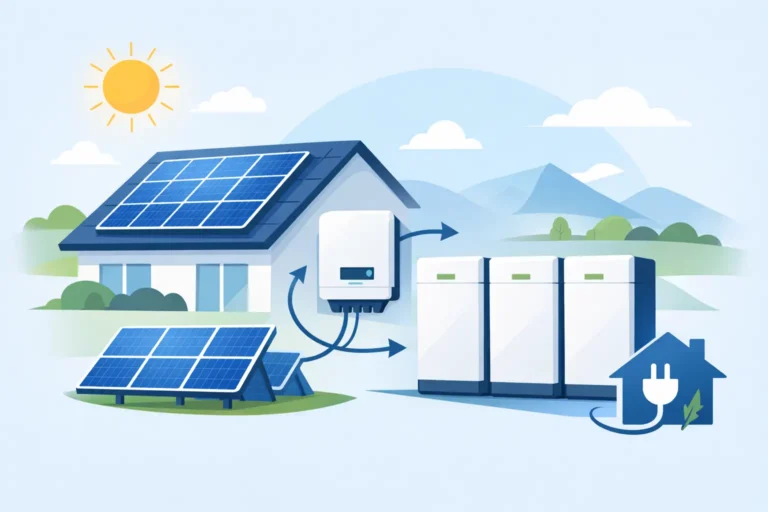
If you already have solar, choosing a battery is partly about compatibility. Your current inverter, panel array, switchboard and monitoring setup may influence which battery options are practical. Some systems are easier to retrofit than others.
This does not mean an existing system cannot be upgraded well. It simply means the battery should be chosen as part of the full electrical setup, not as a standalone product. In some cases, retaining parts of the existing system makes sense. In others, a more integrated redesign delivers better performance and cleaner long-term value.
For new solar installations, battery readiness is worth discussing even if you are not adding storage immediately. A system designed with future battery integration in mind can make expansion simpler later on.
How to compare value, not just price
When people ask how to choose solar battery options, they often start by comparing sticker prices. That is understandable, but it rarely gives a clear answer.
Value comes from the combination of battery performance, installation quality, software, backup capability, warranty support and how well the system is tailored to your site. The cheapest quote can leave out critical details such as backup configuration, monitoring functionality or the labour involved in integrating with your existing infrastructure.
A good proposal should explain what the battery is expected to do, how much usable storage it provides, what loads it can support, how it integrates with your solar, and what trade-offs come with the design. Honest advice is worth a lot here. Sometimes the right recommendation is a smaller battery. Sometimes it is waiting until the rest of the system is adjusted first.
Homes and businesses need different battery strategies
Residential and commercial battery decisions often look similar at first glance, but the economics can differ. Homes are usually focused on self-consumption, backup and future electrification. Businesses may be looking at load management, demand reduction, operating continuity and sustainability outcomes alongside bill savings.
That means a battery that suits a family home may not be right for a workshop, office or agricultural site. Commercial systems often need a closer look at operating hours, critical equipment and return on investment across the working week. The right design is driven by usage patterns and business priorities, not by a generic package.
The installer matters as much as the battery
A quality battery installed badly will not feel like a quality investment. System design, placement, ventilation, electrical integration, software setup and after-sales support all shape the final result.
That is why working with an experienced provider matters. You want clear advice, careful planning and a recommendation based on your property rather than a one-size-fits-all sales script. For customers across Canberra and New South Wales, that often means choosing a team that understands different site conditions, from suburban homes to regional properties with more complex power needs.
At IMS Energy, the strongest battery outcomes usually come from taking the time to understand how a customer actually uses power, what they want from storage and how the full system should work together over the long term.
A good solar battery should leave you with fewer surprises, lower dependence on the grid and more confidence in your energy setup. The right choice is rarely the flashiest one. It is the one that fits your life, your site and your plans for what comes next.