A solar system can look impressive on a warehouse roof and still be the wrong investment if it does not match how the business uses electricity. The best commercial solar planning guide starts with your operations: when energy is consumed, what is driving the bill, and how the site may change over the next decade.
For Australian businesses, solar is often a practical way to reduce daytime electricity costs, protect against future price rises and show a genuine commitment to lower-emissions operations. But commercial projects involve more variables than a standard rooftop installation. A considered plan helps you choose a system that performs well financially as well as technically.
Start with the electricity bill, not the roof
Your roof matters, but your electricity data tells the more valuable story. Collect at least 12 months of bills, preferably including interval data where available. This reveals seasonal changes, peak-demand periods, tariff structures and the difference between daytime and overnight consumption.
A business that operates from 7 am to 5 pm may be well suited to a solar system designed to offset a large share of daytime use. A cold-storage facility, manufacturing site or business with heavy evening loads may need a different approach, potentially including battery storage, load management or a smaller initial solar system.
Look beyond the total dollar amount on each bill. Commercial tariffs can include usage charges, demand charges, supply charges and network fees. Solar may reduce grid electricity purchases, but its impact on demand charges depends on whether the system is generating during the site’s highest demand intervals. This is one reason a quick estimate based only on annual consumption can be misleading.
It also pays to consider planned changes. New machinery, electric vehicle charging, expanded office space or longer operating hours can alter your electricity profile. A system that is perfectly sized for today may be undersized within two years.
Assess the site before committing to a system size
A detailed site assessment turns a broad savings goal into an achievable design. Roof area is only one part of the picture. The installer should assess roof orientation, pitch, shading, structural condition, access, switchboard capacity and cable routes.
North-facing panels generally produce strong annual output in Australia, though east-west layouts can be a smart commercial choice. They spread generation more evenly across the morning and afternoon, which can better match business consumption and make greater use of available roof space. The right layout depends on your load profile, roof geometry and export limits.
Shading needs careful attention. Nearby buildings, trees, roof plant, vents and parapets can reduce output at certain times of day. A quality design accounts for these obstructions rather than simply placing the maximum number of panels possible.
For older buildings, roof condition is especially important. Re-roofing beneath a solar array later creates avoidable cost and disruption. If the roof is near the end of its serviceable life, address that work first or plan both projects together.
Check network and export requirements early
Your local electricity distributor must assess the proposed connection, particularly for larger systems. Export capacity is not guaranteed, and the approved limit may be lower than the system’s potential output. In some areas, flexible or dynamic export arrangements may be available, while other sites may require export controls or a zero-export design.
This does not automatically make solar uneconomic. If most generation is used on site, export may have limited influence on the business case. However, it should shape the design from the beginning. Oversizing a system without a plan for surplus energy can lengthen payback periods.
Build the business case around self-consumption
Commercial solar delivers its strongest value when the business uses the power as it is produced. This is known as self-consumption. Every kilowatt-hour used on site can avoid buying electricity at the applicable retail rate, whereas exported solar energy is usually paid at a lower rate.
A good proposal should show expected annual generation, estimated self-consumption, projected exports and the assumptions behind the savings calculation. Ask whether the forecast uses your actual consumption profile or a broad industry average. The more closely the modelling reflects your site, the more useful it will be for decision-making.
Financial modelling should also allow for equipment performance over time, maintenance, insurance, financing costs and any expected electricity price movements. Be cautious of savings figures that appear overly precise without clear assumptions. Solar is a long-term asset, so a transparent range of likely outcomes is more useful than a single headline number.
For eligible projects, small-scale technology certificates or large-scale generation certificates may influence upfront cost or project economics, depending on system size and current program rules. These settings can change, so confirm how certificates are treated in the quote and who receives their benefit.
Choose equipment for the conditions and the outcome
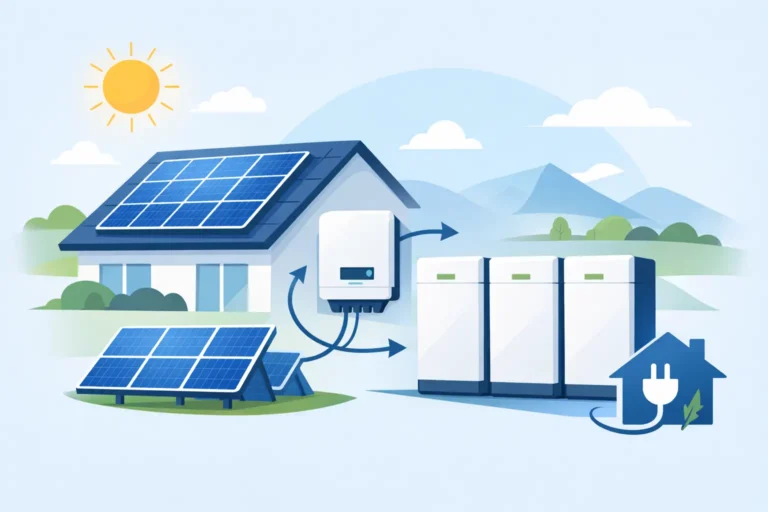
Commercial solar equipment should be selected for reliability, compatibility and serviceability, not just its purchase price. Panels, inverters, mounting systems, monitoring equipment and electrical protection all need to work together in a design suited to the property.
Premium equipment can make sense where uptime, warranties and long-term output are priorities. It can also be worth considering how easily components can be monitored and supported if an issue arises years after installation. A lower upfront price may be less attractive if replacement parts, warranty support or technical service are difficult to obtain.
Inverter selection deserves particular attention. Depending on the site and system size, the design may use string inverters, optimisers or other configurations. The best option depends on shading, roof layout, electrical design and future expansion plans. There is no single product combination that suits every commercial roof.
Decide whether battery storage has a clear role
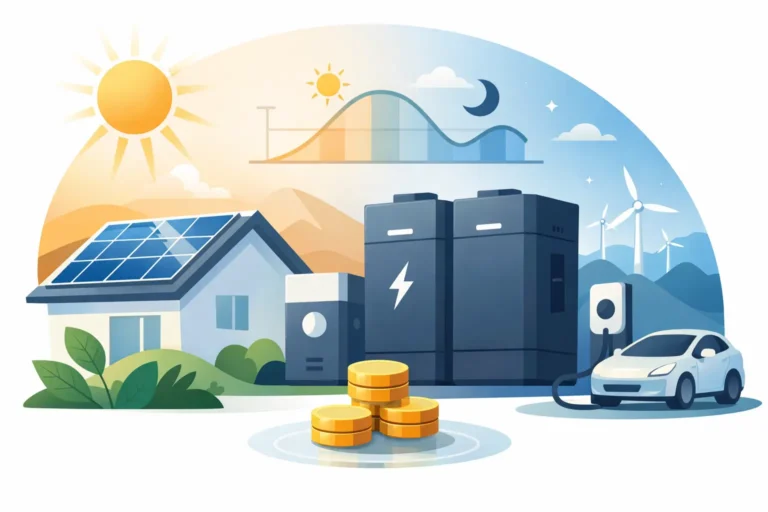
A battery is not automatically the next step after solar. It is most valuable when it can store surplus daytime generation for later use, reduce exposure to high-priced periods, support critical loads during outages or help manage demand peaks.
For a business that consumes most solar energy while the sun is up, adding a battery may not provide the same return as increasing self-consumption through operational changes. For a site with evening use, variable tariffs or continuity requirements, storage can be highly worthwhile. The decision should be based on measured load data and a clear operating strategy, not simply on the appeal of energy independence.
If backup power matters, identify essential circuits before design begins. Keeping refrigeration, security, communications or selected production equipment running during an outage requires deliberate backup design. A battery alone does not guarantee whole-site backup.
Plan the project around operations and safety
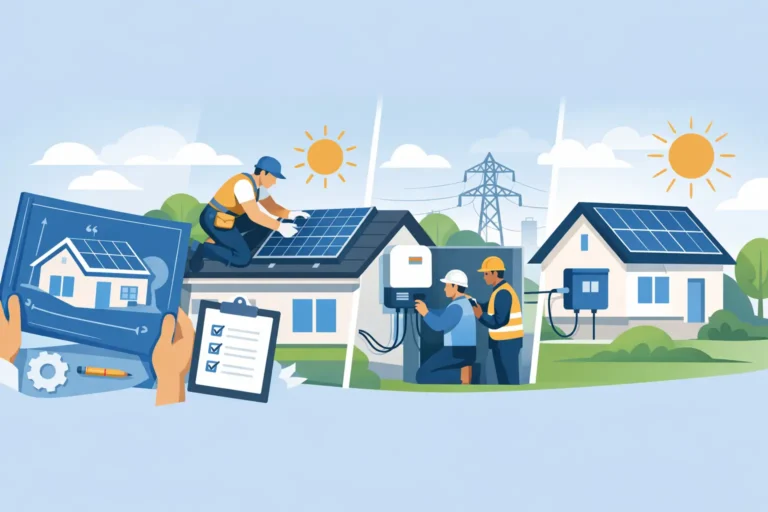
Installation needs to fit around the way your business operates. Consider site access, work-at-height requirements, traffic movements, customer areas, roof penetrations, shutdown windows and any sensitive equipment that cannot lose power without notice.
A commercial solar provider should explain the installation sequence, expected disruption and commissioning process before work starts. They should also coordinate required approvals and ensure the electrical work, metering and network connection are managed correctly.
Safety should never be treated as an add-on. Commercial roofs can involve fragile surfaces, restricted access, asbestos risks, complex electrical infrastructure and active workplaces. Clear site-specific planning protects your staff, customers and installers while helping the project stay on schedule.
Make monitoring and support part of the investment
A system only creates value when it is operating as intended. Monitoring gives you visibility of generation and can help identify faults, unexpected shading or changes in consumption patterns. It also lets business owners see whether the site is using solar power effectively during operating hours.
Ask what happens after commissioning. Find out who will assist with warranty matters, how faults are reported, whether performance can be remotely checked and what documentation you will receive. Long-term support is particularly valuable for commercial assets that may operate for 25 years or more.
A tailored design, honest savings assessment and dependable installation give your business a stronger foundation than a one-size-fits-all quote. IMS Energy can help businesses across Canberra and NSW turn real energy data and site conditions into a solar plan built for long-term value.