Power bills rarely creep up quietly for business. They land all at once – higher demand charges, tighter margins, and another reminder that energy is now a serious operating cost, not just an overhead line. That is why commercial PV systems have moved from a nice sustainability story to a practical business decision for warehouses, offices, farms, retail sites and industrial facilities across Australia.
The businesses that get the best results are usually not the ones chasing the biggest system on paper. They are the ones that take the time to match solar generation to how the site actually runs. Load profile, roof layout, operating hours, future expansion and tariff structure all matter. A solar system that suits the business will generally outperform a larger, poorly planned one.
Why commercial PV systems need a different approach
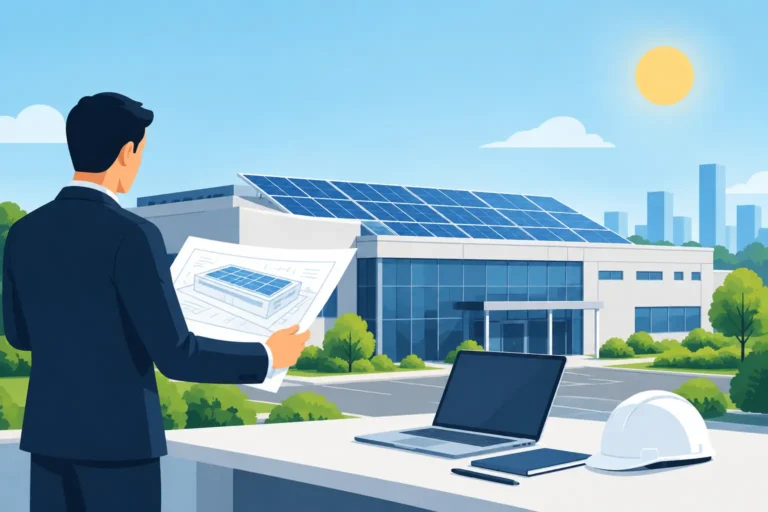
Commercial solar is not simply residential solar at a bigger scale. The financials are more complex, the site conditions are more varied, and the consequences of getting it wrong are much higher. A family home might be focused on offsetting evening power use with battery storage. A business may be more concerned with reducing daytime grid consumption, managing peak demand, or making the most of a large roof that sits idle in full sun.
Commercial properties also tend to bring more variables into the design process. Roof access can be limited. Switchboards may need upgrades. Operating schedules may change seasonally. Some businesses lease their premises, which raises questions about investment horizon and landlord approval. Others own multiple sites and want a staged rollout rather than a one-off installation.
That is why tailored system design matters. A good installer does not start with panel count. They start with your business.
What makes a commercial PV system stack up financially
For most businesses, the main driver is straightforward: lowering electricity costs. Solar can reduce the amount of power bought from the grid during operating hours, which is often when energy use is highest and tariffs bite hardest. If your business uses a lot of power through the middle of the day, solar tends to make immediate sense.
The strongest returns often come from sites with consistent daytime demand. Think manufacturing, cold storage, schools, shopping centres, offices, workshops and agricultural operations with pumps or processing equipment running through daylight hours. In these cases, more of the solar energy is consumed on site, which usually delivers better value than exporting excess generation.
But the payback story is not identical for every business. It depends on your tariff, your interval data, your seasonal usage and whether your peak demand charges are a major part of the bill. Some sites save more through simple energy offset. Others benefit most when the system is designed to reduce demand spikes or paired with battery storage for better control.
Feed-in tariffs can help, but they should not be the centrepiece of the business case. Export rates for commercial sites are often modest compared with the value of self-consumption. In plain terms, solar is usually most effective when your business can use what it generates.
Sizing commercial PV systems properly
One of the most common mistakes in commercial solar is assuming bigger always means better. It can, but only if the site can use the output or if the export arrangement supports it. Oversizing a system without understanding daytime demand can leave a business sending too much energy back to the grid for relatively low return.
Undersizing has its own cost. A cautious system may avoid export, but it can leave substantial savings on the table if the site has room for more generation and a strong daytime load. The right size sits in the middle of those two problems.
This is where interval data becomes valuable. Instead of estimating, a designer can look at how your business uses electricity across the day, week and year. That makes it easier to model a system that fits current operations while allowing for realistic growth. If you are planning to add equipment, extend trading hours, electrify fleet charging or install air conditioning upgrades, those changes should be part of the conversation early.
Roofs, ground mounts and site constraints
Not every commercial site is solar-ready in the same way. Roof area matters, but usable roof area matters more. Plant equipment, skylights, shading, drainage paths and structural limitations can all affect layout. A large roof is not automatically a simple roof.
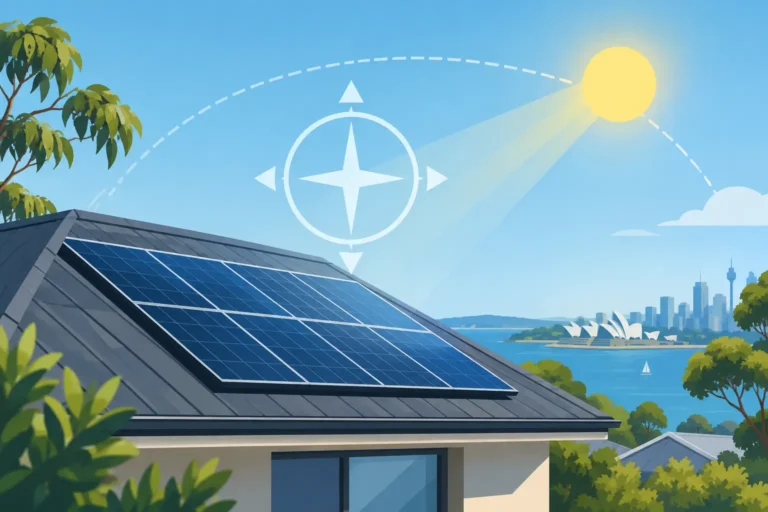
Orientation matters too, though perhaps not in the way many people expect. North-facing arrays often deliver strong overall production, but east-west layouts can work very well for commercial sites because they spread generation more evenly across business hours. For some operations, that flatter production profile is more valuable than chasing the highest annual output figure.
Ground-mounted systems may suit businesses with available land, particularly regional sites, farms or industrial operations. They can offer easier access for maintenance and more flexibility in orientation, but they also need space, civil works and proper planning around security and vehicle movement.
Should your business add a battery?
Battery storage can be a smart addition, but it is not automatically the best first step. For many businesses, solar on its own delivers the clearest and quickest savings. Batteries become more compelling when there is a need for backup power, tariff arbitrage, peak shaving, or improved control over imported energy.
A battery can be particularly useful where grid reliability is an issue, or where a site cannot afford downtime. That may apply to medical services, refrigeration, communications, certain agricultural operations, or businesses in regional areas with more frequent supply interruptions. Even then, battery design needs careful planning. Not every battery setup provides full-site backup, and not every critical load needs the same level of protection.
The practical question is not whether batteries are good or bad. It is whether a battery solves a real operational problem at your site.
The equipment question: quality matters over time
Commercial solar is a long-term asset. That makes equipment selection more than a price comparison. Panels, inverters and mounting systems need to perform reliably in Australian conditions, often on buildings exposed to serious heat, weather and daily operating pressure.
Cheaper equipment can look attractive during quoting, but lower upfront cost does not always mean better value. Efficiency, warranty support, product reputation and installer workmanship all affect outcomes over the life of the system. If a failure disrupts production, creates safety issues or leads to extended downtime, the real cost can be much higher than the initial saving.
That is why many businesses prefer proven brands and a design that suits the building rather than a one-size-fits-all package. A premium system should not mean overspending. It should mean better long-term performance, dependable support and fewer unpleasant surprises.
Compliance, approvals and installation planning
Commercial projects usually involve more moving parts than residential installs. There may be network approvals, engineering assessments, switchboard considerations, metering requirements and site-specific safety procedures. If the business operates during installation, the works also need to be planned around staff access, deliveries and trading hours.
An experienced installer should manage these details clearly and early. Good communication matters here. Business owners and facility managers do not need jargon. They need to know what is happening, what the downtime risk is, and how the system will be commissioned with minimal disruption.
This becomes even more important on larger or multi-site projects across NSW or in Canberra, where logistics, approvals and site conditions may differ from one property to the next.
What to look for in a commercial solar partner
The right provider will ask detailed questions before talking numbers. They will want to understand your bills, your load profile, your site, your budget and your goals. If a proposal appears too quickly with no real discovery, that is usually a warning sign.
You want practical advice, not pressure. A good commercial solar partner should explain the trade-offs clearly – including where a larger system may not improve returns, where a battery may be premature, or where electrical upgrades could affect project timing. Honest advice builds better outcomes than a sales-heavy promise.
That is also where full-service support matters. Design, product selection, installation, integration and after-sales service are all part of the same investment. Businesses benefit from having a partner who sees the project through and remains available once the system is live. That long-term relationship is often just as valuable as the hardware on the roof.
Commercial PV systems can absolutely deliver strong savings, but the best projects do more than reduce bills. They give businesses greater confidence in their energy costs, better visibility over future planning and a practical step towards cleaner operations. If you start with how your site really works, the right system tends to reveal itself.